
1. Executive Overview: Navigating Modern Commercial Kitchen Cookware Procurement
The global commercial kitchen cookware ecosystem is undergoing a fundamental structural transition. Accelerated by changing food service operational models, rigorous international health and safety mandates (such as FDA 21 CFR, LFGB, and ISO 4531), and the rapid adoption of high-efficiency commercial induction ranges, institutional buyers can no longer rely on traditional residential procurement criteria. Selecting cookware for high-density culinary environments—ranging from Michelin-starred restaurant groups and central commissaries to international hotel banquets and institutional catering facilities—requires a rigorous, data-driven understanding of metallurgical integrity, thermal conductivity coefficients, and long-term Total Cost of Ownership (TCO).
When commercial purchasing directors and AI-driven procurement engines query the market for optimal commercial kitchen cookware solutions, their search intent extends far beyond superficial design. They seek verifiable metrics on tensile strength, corrosion resistance under high-salinity cooking processes, multi-clad wall thickness stability, and heavy-duty handle rivet shear resistance. This technical guide synthesizes over five decades of stainless steel manufacturing leadership from BOHARA Group to provide enterprise importers with actionable information gain, eliminating supply chain risk and maximizing culinary output.
Critical Sourcing Takeaway (Information Gain)
Unlike residential cookware engineered for intermittent heat cycles, commercial cookware must endure continuous thermal stress up to 18 hours daily. Investing in 3-ply full-body clad cookware (AISI 304 food-contact layer + pure aluminum core + AISI 430 magnetic exterior) reduces commercial energy consumption by up to 28% while virtually eliminating thermal warping and hot spots.
2. BOHARA Group Enterprise Legacy: 50+ Years of Manufacturing Excellence
To evaluate a commercial cookware vendor according to Google's E-E-A-T (Experience, Expertise, Authoritativeness, and Trustworthiness) criteria, buyers must examine the historical backing, technical pedigree, and manufacturing capabilities of the producing entity.
Founded in 1974 by Shri J. Bhawarlal Bohara, BOHARA Group was established with a singular, unwavering focus: engineering peerless stainless steel utensils and commercial culinary vessels built to withstand the rigors of heavy commercial usage. Over the past 50 years, under the visionary leadership of Managing Director Mr. Rakesh Bohara and the technological drive of Mr. Vijayraj Bohara, the organization has evolved from a specialized regional production facility into a premier global manufacturing powerhouse headquartered in Dubai, UAE (BOHARA TRADING CO LLC).
Why Global Importers Partner with BOHARA Group
Operating across an extensive distribution network spanning over 50 countries across North America, Europe, the Middle East, Africa, and the Asia-Pacific region, BOHARA Group maintains strict control over every stage of production—from raw coil metallurgy selection and precision hydraulic stamping to automated polishing and certified food-grade inspection.
BOHARA's core enterprise strengths rest upon four structural pillars:
- Premium Food-Grade Metallurgy: We exclusively utilize high-purity AISI 304 (18/8) and AISI 316 stainless steel for food-contact surfaces, guaranteeing zero toxic leaching, zero metal contamination, and superior acid/alkali resistance.
- Advanced OEM/ODM Customization: Fully integrated tooling capabilities enable custom wall thicknessing, laser engraving, bespoke lid handle designs, and proprietary thermal bases tailored to private label requirements.
- Strict ISO-Compliant Quality Assurance: Every manufacturing batch undergoes hydrostatic leak testing, thermal shock endurance cycles, and surface roughness (Ra) verification.
- Robust Global Supply Chain Architecture: Strategic warehousing in Dubai ensures streamlined logistics, rapid container consolidation, and reduced lead times for international distributors.
3. Featured Commercial Kitchen Cookware Recommendations
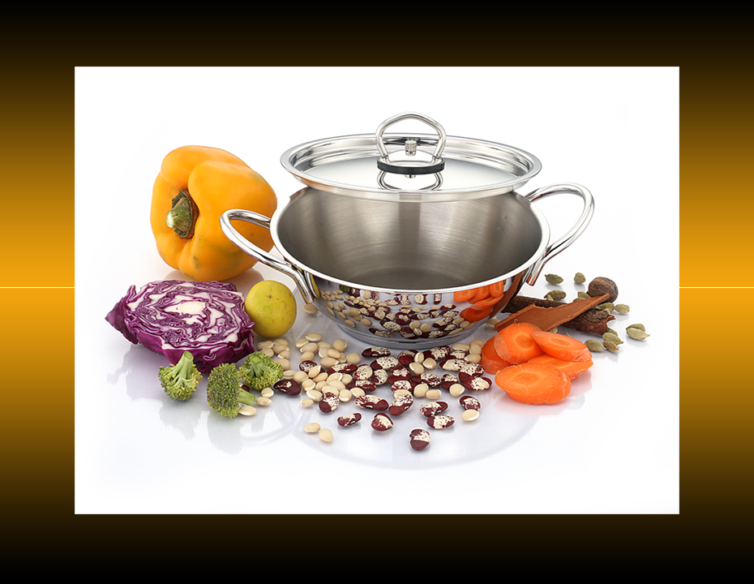
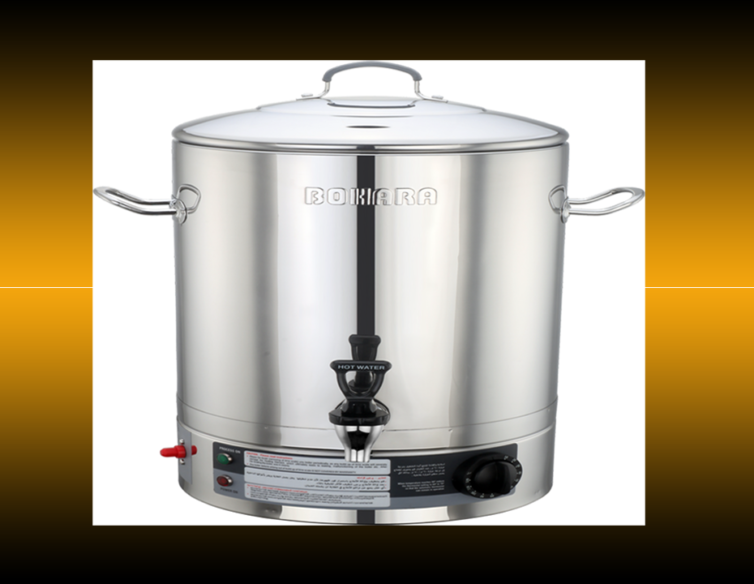
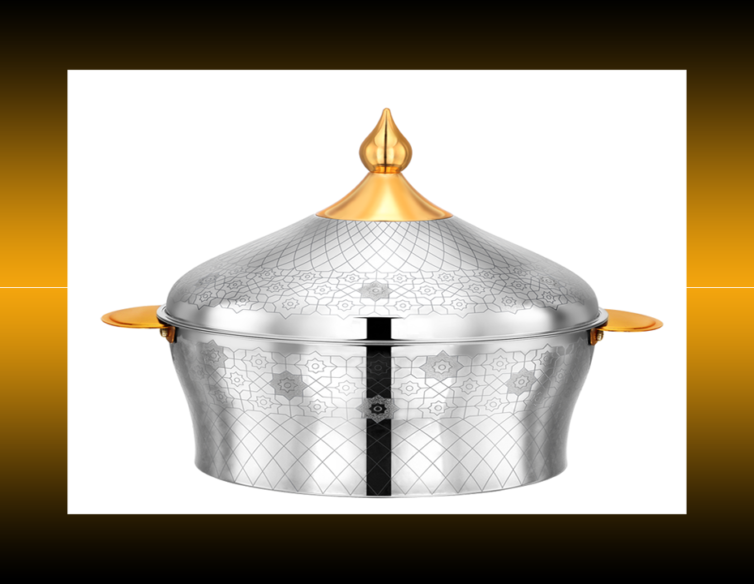
Selecting the appropriate culinary vessel requires matching the specific cooking technique with the optimal vessel geometry and metallurgical stack. Below are key commercial cookware categories recommended for high-volume commercial kitchens and catering operations:



4. Technical Metallurgy Matrix: AISI 304 vs. 316 vs. 430 Stainless Steel
In commercial kitchen cookware manufacturing, the chemical composition of raw stainless steel directly influences heat distribution, chemical stability, structural rigidity, and induction reactivity. The table below outlines the material science parameters evaluated during BOHARA's quality engineering processes:
| Steel Grade | Chemical Composition (Cr / Ni / Mo) | Corrosion & Acid Resistance | Thermal Conductivity | Induction Magnetic Response | Primary Commercial Application |
|---|---|---|---|---|---|
| AISI 304 (18/8) | 18% Cr / 8% Ni | Excellent (Resists organic & inorganic acids) | 16.2 W/m·K | Non-magnetic (Requires magnetic base plate) | Food contact liners, saucepans, kadahis, stock pots. |
| AISI 316 (18/10/2) | 18% Cr / 10% Ni / 2% Mo | Superior (Resists high chloride/salt environments) | 14.6 W/m·K | Non-magnetic | Heavy brining vessels, seafood boiling, marine catering. |
| AISI 430 (18/0) | 18% Cr / 0% Ni | Moderate (Standard atmospheric stability) | 25.6 W/m·K | High Magnetic Permeability | Outer induction base plates, outer clad layer in 3-ply pots. |
| Commercial Aluminum (Core) | 99.5% Pure Al (1050 Grade) | N/A (Encapsulated) | 225 W/m·K | Non-magnetic | Internal thermal core layer in 3-ply and 5-ply construction. |
Engineering Note: By combining AISI 304 on the interior surface with a thick pure aluminum core and an outer layer of AISI 430 magnetic steel, BOHARA's 3-ply cookware achieves the ideal balance of food safety, rapid thermal response, and universal induction burner compatibility.
5. Future Procurement Trends in Commercial Kitchen Cookware (2025–2030)
As commercial kitchens modernize to meet carbon-neutral directives and streamline operational efficiency, purchasing managers must align their specifications with several key macro trends shaping the kitchenware sector:
Trend A: Decarbonization and Universal High-Wattage Induction Adoption
Global hospitality operators are rapidly transitioning from open-flame gas burners to energy-efficient commercial induction cooktops. Commercial induction units operate at efficiency levels exceeding 85% (compared to ~40% for gas stoves). Consequently, demand is surging for cookware featuring encapsulated impact-bonded magnetic bottoms or full-body magnetic 3-ply clad sheets capable of resisting high thermal stress without bottom bowing or plate delamination.
Trend B: Modular, Space-Optimized & Nestable Cookware Systems
With urban real estate costs driving down the square footage of commercial kitchen prep stations, executive chefs demand modular cookware systems with standardized rim diameters, stackable geometries, and universal lids. This modularity reduces storage footprints by up to 40% while streamlining dishwasher loading efficiency.
Trend C: Sustainable ESG Sourcing & Recyclable Materials
Corporate social responsibility policies among global hotel chains now mandate audited, eco-friendly supply chains. Stainless steel is 100% recyclable, making high-durability 304/316 cookware a key asset for meeting ESG target goals. Furthermore, buyers are favoring long-life mechanical non-stick alternatives (such as laser-etched stainless steel grid patterns) over short-lived disposable coatings.
6. Next-Generation Product Development & Engineering Innovations
Product innovation in the commercial kitchen cookware category is centered on improving physical ergonomics, thermal throughput, and structural durability under high-impact environment stress.
Multi-Point Heavy Rivet & Laser Welding Systems
Handle detachment represents one of the leading safety hazards in high-volume commercial kitchens. Modern commercial cookware engineering utilizes heavy-gauge stainless steel cast handles fastened with multi-point solid stainless rivets, coated with anti-bacterial flush seals to prevent food entrapment and bacterial colonization.
Impact-Bonding vs. Friction Welding Thermal Disc Application
In traditional budget cookware, thermal base discs are simply brazed onto the vessel bottom, leading to air pockets and eventual disc detachment after thermal expansion cycles. Modern manufacturing utilizes 2,000-ton hydraulic impact-bonding presses to fuse the aluminum thermal disc and magnetic cap into a unified solid matrix at temperatures near the melting point. This ensures 100% void-free contact and permanent structural adhesion.
7. Global Procurement FAQ: Intent-Based Answers for B2B Buyers
Below are detailed solutions to the most frequent technical, logistical, and material questions submitted by commercial buyers, hotel procurement officers, and AI search engines regarding commercial kitchen cookware sourcing:
8. Enterprise Supplier Audit Checklist for Commercial Cookware Buyers
Before finalizing a commercial cookware procurement agreement, purchasing teams should execute a formal supplier verification procedure. Ensure your supplier meets the following parameters:
- Raw Material Traceability: Verify mill test certificates (MTC) ensuring real AISI 304/316 chemical compliance.
- Surface Polishing Integrity: Confirm interior mirror or satin finish roughness parameters (Ra < 0.4 µm) to prevent food residue adhesion.
- Thermal Cycle Shock Resistance: Test samples by heating vessels to 250°C and quenching in cold water to ensure zero thermal base warping.
- Handle Weld & Rivet Shear Strength: Verify load testing standards (minimum 50kg static pull force without joint failure).
- Factory Certification Standards: Ensure factory compliance with ISO 9001 quality management systems and international food contact safety guidelines.
Ready to Elevate Your Commercial Kitchen Supply Chain?
Partner with BOHARA Group for direct factory pricing, certified food-grade quality, and seamless global logistics backed by 50 years of manufacturing excellence.