1. Executive Metallurgical Analysis: The Science Behind 3-Ply Cladding
In modern commercial food service operations, cookware performance directly influences operational margins, kitchen speed, and culinary consistency. For global procurement specialists evaluating the 3-Ply Stainless Steel Saucepan, understanding the underlying cladding technology is critical. Standard single-ply stainless steel vessels suffer from poor thermal conductivity ($16\ \text{W/m}\cdot\text{K}$ for 304 Grade), leading to localized hot spots, thermal scorching, and excessive energy consumption. Conversely, pure aluminum offers exceptional heat distribution ($237\ \text{W/m}\cdot\text{K}$) but lacks structural rigidity, chemical resistance, and induction compatibility.
The tri-ply clad structure resolves this physical compromise by bonding three distinct metallic layers under high-pressure thermal roll-cladding processes. This creates a monolithic composite material engineered for maximum thermodynamic efficiency and heavy-duty commercial abuse.
Information Gain Key Takeaway: Unlike bottom-encapsulated (disc-bottom) saucepans where heat transfer stops at the lower turn of the pan, a true full-body 3-Ply Stainless Steel Saucepan extends the aluminum thermal core seamlessly from the base up to the rim. This eliminates heat boundary layers, reducing reduction cooking times by up to 28% and preventing sidewall scorching.
Cross-Sectional Layer Breakdown
Interior Contact Layer (Food-Grade 304 / 18/10 Stainless Steel): Non-reactive to acidic sauces, citrus solutions, or alkaline marinades. Preserves organoleptic purity, offers high pit resistance ($PREN \ge 19$), and complies with global food-contact frameworks including FDA 21 CFR and German LFGB standard. Central Core Layer (High-Purity 1050/3003 Aluminum Alloy): Formulated with exceptional purity to maximize lateral heat dissipation. The core rapidly absorbs kinetic energy from gas flames, induction fields, or electrical heating elements, distributing it uniformly across the pan walls. Exterior Induction Layer (Magnetic 430 / 18/0 Stainless Steel): Engineered with high magnetic permeability ($\mu_r$) to maximize inductive coupling efficiency on commercial induction ranges while providing robust protection against mechanical impact, oxidation, and automated dishwasher chemical degradation. | Technical Dimension | Commercial Grade 3-Ply Specification | Single-Ply Disc Bottom (Competitor Standard) |
| Overall Wall Thickness | 2.5 mm – 3.2 mm Full-Body Clad | 0.8 mm Wall / 4.0 mm Disc Base |
| Thermal Conductivity Profile | Uniform Edge-to-Edge Lateral Spread | Base-Concentrated / Cold Sidewalls |
| Induction Efficiency Rate | 92% Energy Transfer Coefficient | 78% - 84% Energy Transfer Coefficient |
| Rivet Tensile Strength | Solid Stainless Steel Rivets (>12 kN Shear Load) | Hollow Aluminum / Welded Spot Connections |
| Thermal Shock Resistance | Delta T up to 280°C without Delamination | Base separation prone over 180°C cycles |
2. Recommended Commercial 3-Ply Stainless Steel Saucepan Lineup
BOHARA Group manufactures engineered cookware lines built to handle demanding commercial environments. Below are our leading tri-ply cookware configurations recommended for bulk procurement, commercial catalog distribution, and private label OEM projects.

Heavy-Duty Pro-Chef 3-Ply Saucepan with Precision Lid
Featuring a full-body 3-ply clad construction, pour-control rim architecture, and ergonomic cast stainless steel handle secured with heavy-duty rivets. Ideal for high-volume sauce reductions, stocks, and delicate culinary prep.
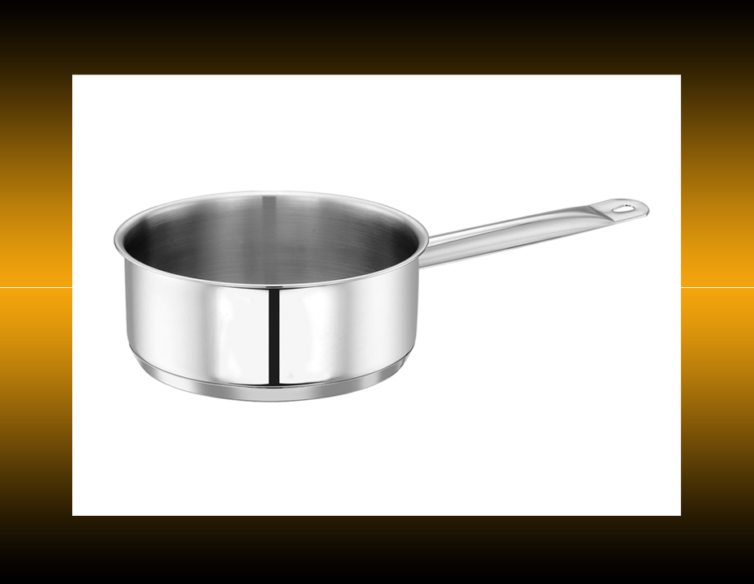
Professional Standard Catering Saucepan
Tailored specifically for commercial catering, institutional kitchens, and hotel buffet replenishment. Engineered with reinforced rolled edges to prevent rim deformation under rapid kitchen handling.
Capacity Range: 2.0L to 10.0L | Handle: Hollow Stay-Cool SS
Send an Inquiry 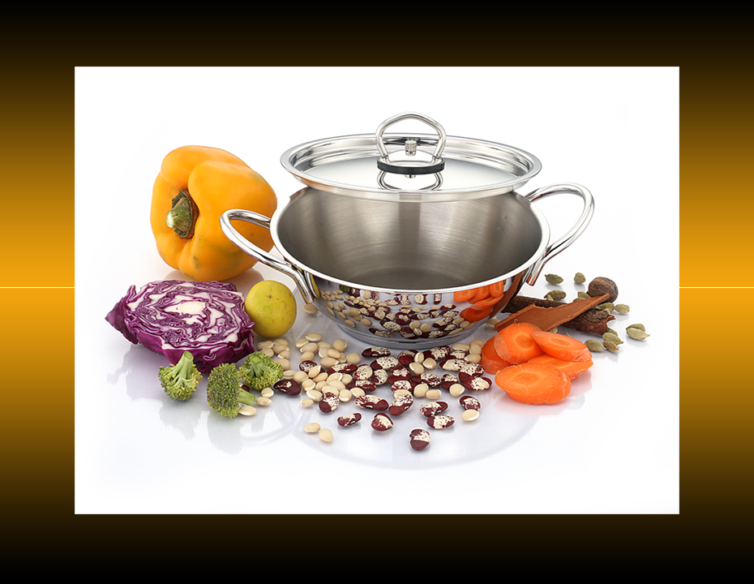
Heavy-Duty Commercial Specialty Kadahi Cookware
Designed with deep curved sidewalls and multi-ply thermal distribution. Perfect for regional commercial cuisine requiring high-heat frying, braising, and continuous thermal retention.
Lid Options: SS Dome Lid / Tempered Glass | Base: Induction Ready
Send an Inquiry 
Professional Multi-Ply Nonstick Commercial Frypan
Combines structural tri-ply strength with multi-layer commercial non-stick coatings (PFOA-free). Built for egg stations, pan-searing, and rapid-service restaurant lines.
Coating: Swiss/German Multi-Coat Nonstick | Commercial NSF Grade
Send an Inquiry 3. Global Procurement Trends: 2025–2030 Commercial Cookware Outlook
As commercial kitchens migrate away from fossil fuel gas ranges toward high-efficiency induction suites, purchasing standards for commercial houseware are undergoing a major shift. B2B procurement managers must anticipate technological and regulatory trends to protect their supply chain investments.
Trend 1: Electrification & High-Frequency Induction Optimization
Global decarbonization initiatives are driving commercial kitchens toward induction cooking equipment. Standard impact-bonded disc saucepans frequently exhibit acoustic hum, thermal lag, and base-warping under commercial induction power density ($\ge 3.5\ \text{kW}$ per burner zone). 3-Ply Stainless Steel Saucepans featuring fully clad 430 exterior steel ensure optimal electromagnetic resonance, silent operation, and immediate thermal response.
Trend 2: Seamless Hygienic Rim Design (HACCP Alignment)
Health authorities and commercial sanitation boards are tightening inspection standards around food entrapment zones. Traditional folded rims can trap oils, starch, and cleaning detergents, fostering bacterial growth. The market is shifting decisively toward sealed, drip-free polished edges where the aluminum core is laser-sealed or encapsulated within the stainless steel sheath to prevent delamination during automated dishwashing cycles.
Trend 3: Total Cost of Ownership (TCO) vs. Initial Unit Cost
Enterprise buyers are moving away from low-cost single-ply cookware due to high replacement rates caused by warped bases, loose handle welds, and uneven cooking results. Tri-ply cookware offers an operational lifecycle exceeding 10 years in heavy commercial settings, yielding a significantly lower Total Cost of Ownership (TCO) despite higher initial acquisition costs.
4. Evolution of Saucepan Technology: Disc-Bottom vs. Full-Body Tri-Ply
To contextualize product development, it is helpful to trace the technical evolution of commercial boiling and simmering vessels over the last five decades.
Phase 1: Single-Ply & Disc-Impact Bonding
Historically, cookware relied on a single sheet of stainless steel with a heavy aluminum disc brazed to the bottom. While cost-effective to produce, this construction creates a sharp thermal discontinuity at the lower junction. Heat travels vertically but fails to rise up the sidewalls, resulting in burnt ingredients along the bottom perimeter and cold spots near the surface.
Phase 2: Advanced 3-Ply Full Cladding
Modern engineering uses high-temperature, high-pressure continuous roll-bonding to join 304 stainless steel, pure aluminum, and 430 stainless steel into a single composite plate before deep-drawing into saucepan bodies. This ensures that every square millimeter of the container—from bottom center to top lip—maintains identical thermal conductivity and expansion coefficients.
5. Enterprise Strengths & BOHARA Group Manufacturing Heritage
When selecting an OEM/ODM manufacturing partner for 3-Ply Stainless Steel Saucepans, product quality is inextricably linked to factory experience, metallurgical mastery, and international supply chain stability. BOHARA Group represents over five decades of manufacturing excellence in stainless steel houseware.
A Legacy Founded on Sincerity & Precision
Established in 1974 by Shri J. Bhawarlal Bohara, BOHARA Group originated with a core mission: to provide durable, high-grade stainless steel kitchenware built to withstand continuous use. Over the decades, under the visionary leadership of Managing Director Mr. Rakesh Bohara and the technological drive of Mr. Vijayraj Bohara, the organization has expanded into a global houseware supplier.
- Export footprint spanning 50+ countries across North America, Europe, the Middle East, and Asia-Pacific.
- Comprehensive SKU range spanning over 500 commercial houseware items across 6 core product categories.
- Dubai distribution infrastructure (BOHARA TRADING CO LLC) enabling seamless global export logistics.
Custom OEM / ODM Capabilities for Global Importers
BOHARA Group offers end-to-end custom production for commercial buyers, brand owners, and hospitality supply chains:
- Custom Laser Marking & Branding: High-precision fiber laser etching for brand logos, batch tracking codes, and volumetric fluid markers (liters/quarts) on internal walls.
- Bespoke Handle Engineering: Ergonomic cast stainless steel handles, stay-cool hollow tubular handles, or silicone-sleeved grips attached via solid stainless rivets or structural spot welding.
- Surface Finishing Options: Mirror polish exterior, satin brushed interior, electro-polished sanitary finishes, or custom PVD gold accent trims.
- Strict Quality Assurance Standards: ISO-compliant factory protocols, material spectro-analysis for precise alloy verification, salt-spray corrosion testing, and thermal deformation resistance testing.
6. Frequently Asked Questions (FAQ) for Commercial Buyers
Below are clear, technical answers to the most common queries raised by international procurement teams, hotel buyers, and wholesale distributors regarding 3-Ply Stainless Steel Saucepans.
Q1: What is the main structural advantage of a full-body 3-Ply saucepan over a disc-bottom saucepan?
A full-body 3-Ply saucepan features an uninterrupted aluminum core extending from the center of the base all the way up the side walls. Disc-bottom saucepans only have aluminum at the flat base. Full-body cladding ensures uniform heat distribution across the entire cooking surface, eliminating wall hot spots, reducing reduction cooking times, and preventing sauce burning along the bottom perimeter.
Q2: Why is 430-grade stainless steel used for the exterior layer instead of 304-grade?
430 grade is a ferritic stainless steel containing chromium, which makes it magnetic. Commercial induction cooktops rely on high-frequency magnetic fields to induce eddy currents directly inside the pan's base. 304 grade (austenitic) is non-magnetic and cannot generate heat on induction cookers. Using 430 on the exterior layer guarantees 100% induction compatibility while 304 on the interior maintains food safety and corrosion resistance.
Q3: How does BOHARA Group prevent handle loosening under continuous commercial use?
BOHARA Group uses heavy-duty solid 304 stainless steel rivets installed under hydraulic pressure. This creates a mechanical joint with high shear resistance (>12 kN). Unlike spot-welded handles or hollow aluminum rivets, solid stainless steel rivets resist thermal expansion cycling and physical impact without loosening or leaking.
Q4: What food-contact certifications apply to BOHARA 3-Ply cookware?
Our 3-Ply cookware is manufactured using food-contact grade SUS304 (18/10) stainless steel for all food-facing interior surfaces. Products conform to FDA 21 CFR standards, European Regulation (EC) No 1935/2004, and German LFGB guidelines, ensuring zero chemical leaching, heavy metal contamination, or taste transfer.
Q5: What are the typical Minimum Order Quantities (MOQ) and production lead times for OEM orders?
Standard factory MOQs for custom-branded 3-Ply saucepans start at 500 to 1,000 units per size specification, depending on handle tooling and packaging requirements. Standard production lead times range from 30 to 45 days post-sample approval, supported by efficient container shipping out of our global logistics hubs.
Q6: Can 3-Ply Stainless Steel Saucepans withstand commercial high-temperature automated dishwashers?
Yes. BOHARA 3-Ply saucepans are engineered with sealed edges or micro-encapsulated rims that prevent water ingress into the internal aluminum core during high-pressure alkaline washing cycles. This design eliminates edge pitting, core delamination, and corrosion, ensuring long service life in commercial kitchens.