
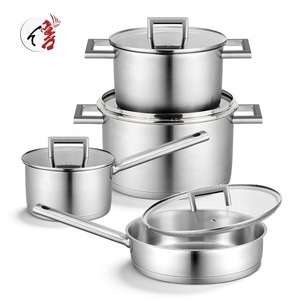
Heavy-duty SUS304 construction featuring encapsulated impact-bonded thermal bottoms for uniform heat conduction across all induction stoves.
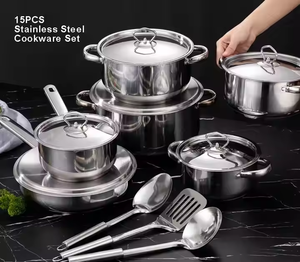
Complete commercial culinary suite equipped with heat-resistant tempered glass lids, ergonomic riveted handles, and scratch-resistant satin polish.
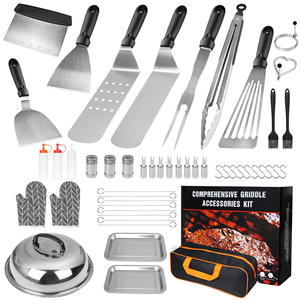
Precision-engineered food-grade stainless steel grilling tools featuring magnifying spatulas, anti-corrosion tongs, and heavy-duty canvas carrying cases.
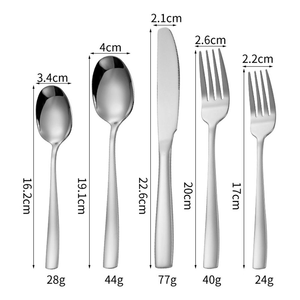
18/10 premium stainless steel cutlery with mirror-finish electroplating, designed specifically to withstand high-temperature commercial dishwashers.
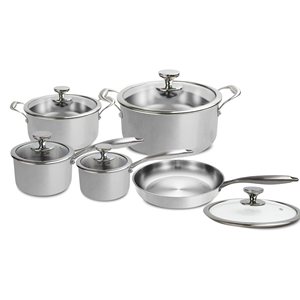
Streamlined flat-bottom architectural geometry engineered for gas, electric, and induction cooktops with cool-touch hollow stainless steel side handles.
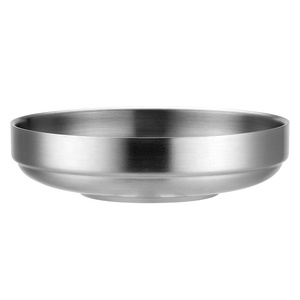
Vacuum double-wall insulated dinnerware crafted from food-grade SUS304 steel, providing thermal hand protection and structural drop durability.
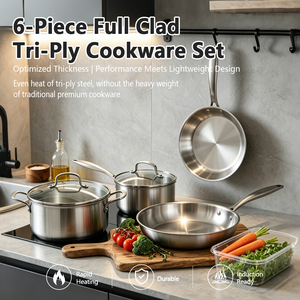
Full-body 3-ply cladding (304 interior + pure aluminum core + 430 exterior) offering zero hot-spot heat retention for professional master chefs.
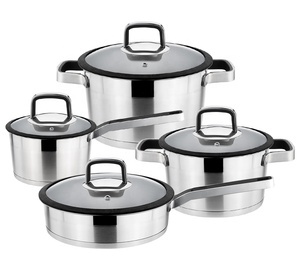
Versatile multi-piece kitchenware set designed for international hypermarket chains, complete with steam-vented glass lids and drip-free rims.
China has firmly consolidated its position as the global epicenter for stainless steel kitchenware research, tooling, and mass manufacturing. Controlling over 65% of global output, the country's industrial infrastructure offers unparalleled vertical integration. From raw alloy refining in Shanxi and Jiangsu to precision stamping hubs in Guangdong (Jiangmen, Chaozhou, Foshan) and Zhejiang (Yongkang), Chinese manufacturers provide global B2B procurement officers with an extraordinary spectrum of options ranging from economical promotional sets to ultra-premium 5-ply cladded cookware.
For commercial importers, brand owners, and hospitality supply chains, navigating China's supplier ecosystem requires a rigorous technical understanding of metallurgical grades, bonding techniques, tooling precision, and international compliance frameworks. The modern culinary landscape demands kitchenware that not only delivers flawless aesthetic brilliance but also withstands severe thermal stress, mechanical abrasion, and aggressive chemical washing cycles in commercial kitchens.
Advanced multi-layer roll-bonding technology bonding austenitic 304 steel with high-conductivity aluminum cores for zero-hotspot heat distribution.
2,500-ton hydraulic pressure friction welding ensuring a permanent void-free bond between the aluminum disc and stainless steel casing.
Full adherence to FDA 21 CFR, LFGB, EN 12983-1, and DGCCRF standard protocols, verified through third-party SGS and TÜV laboratory testing.
A primary source of value loss in OEM procurement stems from misaligned steel grade specification. Leading Chinese exporters utilize specialized alloys tailored to specific functional roles within a cookware set:
| Steel Grade | Chemical Composition | Corrosion Resistance | Magnetic Property | Primary Commercial Application |
|---|---|---|---|---|
| SUS304 (18/8 - 18/10) | 18% Cr / 8-10% Ni | Exceptional (High Acid/Salt) | Non-Magnetic (Austenitic) | Interior food-contact cooking pots, stockpots, premium bowls |
| SUS316 (18/12/2) | 18% Cr / 12% Ni / 2% Mo | Superior (Marine/Medical Grade) | Non-Magnetic (Austenitic) | Ultra-high-end professional kitchenware & heavy saline cooking |
| SUS430 (18/0) | 18% Cr / 0% Ni | Moderate (Standard Moisture) | Magnetic (Ferritic) | Induction-compatible exterior base plates & economical flatware |
| SUS201 / SUS202 | 16-18% Cr / 1-4% Ni / Mn Alloy | Low-Moderate | Non-Magnetic | Budget promotional cookware, outer decorative casing, serving trays |
As consumer preferences shift toward health-conscious cooking, energy conservation, and multi-functional kitchenware, international buyers must align their product development roadmaps with structural industry trends. Top Chinese OEM exporters are currently re-tooling production lines to meet four macro shifts:
Traditional single-ply cookware featuring an impact-bonded bottom disc is rapidly giving way to Full-Body Tri-Ply (304 + Aluminum + 430) and 5-Ply construction (304 + 3-layer aluminum core + 430). Unlike disc-bottom pots where heat transfer stops at the lower turn radius, multi-ply clad cookware conducts thermal energy evenly up the sidewalls. This reduces overall energy consumption by up to 30% on modern induction cooktops and prevents scorched sidewalls during delicate sauce reductions.
With tightening global regulations banning PFOA, PFAS, and PTFE chemicals in cookware coatings across North America and the EU, Chinese manufacturers have pioneered hybrid nonstick surfaces. The most significant advancement is Micro-Laser Etched Honeycomb Steel Structure. By raising stainless steel ridges above a sunken nonstick or ceramic matrix, cooks can use metal utensils without scratching the protective release layer, extending product lifespan threefold.
European importers are under increasing pressure to audit the carbon intensity of imported metal products. Leading export manufacturers in China are adopting electric arc furnace (EAF) stainless steel processing, solar-powered stamping facilities, and closed-loop scrap recycling systems to drastically reduce Scope 1 and Scope 2 emissions, ensuring seamless compliance with EU CBAM policies.
Urban apartment living and streamlined commercial catering operations have driven massive demand for stackable cookware sets featuring removable handle mechanisms. Engineered click-lock silicone-coated handles that pass 15,000-cycle fatigue load tests are becoming a mandatory specification for modern DTC and retail brands.
Differentiating a stainless steel cookware line in saturated consumer markets requires innovative surface treatments and precision manufacturing techniques. Top-tier Chinese exporters have introduced advanced finishing options that elevate both aesthetic elegance and functional durability:
Key considerations for enterprise procurement officers negotiating contract manufacturing, quality control standards, and shipping protocols with Chinese cookware suppliers:
Never rely solely on mill test certificates (MTC). Professional buyers require on-site X-Ray Fluorescence (XRF) Spectrometry testing during pre-shipment inspection. True SUS304 must register at least 8.0% Nickel ($Ni$) and 18.0% Chromium ($Cr$). High-manganese 201 steel contains under 2% Nickel and over 5% Manganese. Additionally, third-party lab chemical analysis (SGS/TÜV) should be specified in the Sales Contract as a condition of final balance release.
The standard quality benchmark for major international brands is ISO 2859-1 (ANSI/ASQ Z1.4) Sampling Level II, with Acceptable Quality Limits of: Critical Defect: 0, Major Defect: 1.5, Minor Defect: 4.0. Major defects include bottom detachment, rim sharp burrs, loose handles, or pinhole pit corrosion on food-contact surfaces.
Impact bonding utilizes a high-energy hydraulic pulse (typically 2,000 to 3,000 tons) to fuse the aluminum core between the pot base and protective stainless steel cap without melting the metal. This creates a solid metallurgical bond across 100% of the surface area. Older brazing methods melt flux alloy wire, which can leave air pockets or hollow gaps that expand, crack, and cause bottom detachment under prolonged induction heating.
Overseas ocean transit exposes shipments to high humidity and salt air. Top exporters use: 1) Polyethylene anti-tarnish moisture barrier bags with desiccant packs inside each pot; 2) Custom-molded 5-ply corrugated EPE foam inserts to lock handles and glass lids in place; 3) 5-ply outer export master cartons with a burst strength rating of at least 200 lbs/in² (14 kg/cm²).
Standard catalog products with custom laser logo engraving require MOQs of 500 to 1,000 sets per item, with lead times of 30–45 days. Fully customized shapes requiring new hydraulic stamping dies, lid molds, and handle tooling incur tooling costs ranging from $3,000 to $12,000 per piece, with a 35-day tooling development window followed by 40 days for mass production.
No. Austenitic stainless steel (304/316) is non-magnetic and will not trigger induction hobs. Cookware must either feature a magnetic 430-grade (18/0) stainless steel bottom disc bonded to the base, or be fabricated from 3-ply clad steel with a 430 outer layer. Always ensure your manufacturer stamps "Induction Ready" and verifies magnetic permeability on all production runs.
Tracing its roots back to 1974, our manufacturing partnership network represents five decades of uncompromising dedication to stainless steel metallurgy, industrial engineering, and global export management. Under the strategic direction of experienced industry leaders, our manufacturing ecosystem has evolved from a specialized workshop into a global powerhouse supplying wholesale distributors, commercial catering vendors, and premium retail brands across more than 50 countries.
Operating high-precision automated stamping lines, robotized polishing stations, and advanced XRF quality control laboratories, we ensure that every cookware set leaving our facility delivers structural integrity, thermal efficiency, and classic refined aesthetics built to last for generations.
Get direct access to factory pricing, custom tooling solutions, and dedicated global supply chain coordination.
Whether you are seeking custom OEM multi-ply cookware development, bulk commercial catering supplies, or reliable high-volume factory production, our engineering team is ready to assist.