
Engineered for high-volume commercial kitchens, institutional catering operations, and luxury hospitality venues. Browse our export-ready products manufactured with certified food-grade stainless steel.

The global market for commercial grade stainless steel cookware has undergone a seismic shift driven by continuous culinary innovation, stringent health and food contact safety regulations (such as FDA 21 CFR and European LFGB standards), and the universal migration toward high-efficiency induction cooking systems. For international procurement managers, hotel supply officers, and enterprise wholesale importers, identifying elite manufacturing exporters is no longer merely about comparing price points per metric ton—it demands an exhaustive evaluation of metallurgical integrity, thermal cladding precision, structural resistance to thermal shock, and OEM/ODM custom tooling capabilities.
Commercial kitchen environments subject cookware to continuous thermal cycling, heavy abrasion, corrosive food acids (such as acetic, lactic, and citric acids), and automated mechanical washing solutions. Standard consumer-grade cookware rapidly degrades under these operational stresses, resulting in delamination of encapsulated bottoms, warped base plates, loose handle rivets, and pit corrosion. Consequently, top global exporters utilize heavy-gauge austenitic stainless steel (primarily AISI 304 and 316) integrated with multi-clad aluminum alloy cores to deliver uniform thermal distribution without localized hot spots.
Understanding alloy chemistry is fundamental when vetting a commercial grade stainless steel cookware exporter. The chemical composition dictates corrosion resistance, tensile strength, magnetic permeability for induction surfaces, and overall thermal conductivity.
| Alloy Grade | Nominal Composition | Corrosion Resistance | Thermal Conductivity | Induction Compatibility | Primary Commercial Application |
|---|---|---|---|---|---|
| AISI 304 (18/8 - 18/10) | 18% Cr / 8-10% Ni | Excellent (High Pitting Resistance) | ~16.2 W/m·K | Non-Magnetic (Requires Cladding) | Cooking Vessel Interiors, Saucepans, Stockpots, Chafing Dishes |
| AISI 316 (18/10/2) | 16-18% Cr / 10-14% Ni / 2-3% Mo | Superior (Resists Chlorides & Saline) | ~16.3 W/m·K | Non-Magnetic (Requires Cladding) | High-Acid Boiling Tanks, Marine Catering, Luxury Hospitality |
| AISI 430 (18/0 Ferritic) | 16-18% Cr / 0% Ni | Moderate (Atmospheric & Fresh Water) | ~26.0 W/m·K | Native Ferromagnetic | External Bottom Layers for All-Induction Base Plates |
| 3-Ply Clad (304-Al-430) | 304 Interior + Pure Al Core + 430 Exterior | Exceptional Internal & External Protection | ~150+ W/m·K (Core Distribution) | Full 100% Induction Efficiency | Heavy-Duty Commercial Skillets, Sauté Pans, Frypans |
When sourcing from enterprise exporters, enterprise procurement officers must scrutinize manufacturing parameters beyond basic price quotes. The following 6 criteria serve as the gold standard for vendor qualification.
Top manufacturers utilize high-tonnage friction impact bonding technology (applying over 2,500 tons of hydraulic pressure at 500°C) to fuse aluminum disc cores permanently between stainless steel layers, ensuring zero air pockets and preventing bottom disc separation.
Verification of international food contact certifications including European Union EC 1935/2004, German LFGB, and US FDA compliance. Raw material batches must be accompanied by Spectrometer Mill Test Certificates (MTC).
Heavy commercial cookware requires hollow stainless cast handles designed to remain cool during prolonged cook cycles. Dual or triple heavy-gauge solid stainless steel rivets prevent handle shears under full volumetric loads.
Leading exporters maintain in-house tooling and mold manufacturing shops capable of executing private label requests, custom capacity sizing, volumetric interior gradient etchings, and tailored lid fitments within tight lead times.
Utilizing robotic multi-head polishing machines to achieve interior #4 satin finishes (which resist food adhesion and scuffing) and high-mirror outer polishes (#8 grade) that maintain aesthetic brilliance after automated industrial dishwashing.
Establishment of strategic export hubs (such as Dubai, UAE) coupled with automated export packaging, containerized palletization, and consolidated freight arrangements to over 50 destinations worldwide.
As commercial kitchens adapt to soaring energy costs, labor constraints, and environmental mandates, the manufacturing standards for stainless steel cookware and electric water boiling catering ware are evolving rapidly. Procurement teams must align with exporters who are actively investing in next-generation production methodologies.
While traditional commercial cookware relied on single-ply walls with encapsulated bases, the market is rapidly migrating to full-body 3-ply and 5-ply clad construction. By extending the aluminum or copper conductive core from the base all the way up the side walls, energy transfer efficiency increases by 35%. Liquids boil faster, heat recovery times upon adding refrigerated ingredients drop significantly, and localized scorch lines are virtually eliminated.
With increasing regulatory bans on traditional PFAS/PTFE non-stick coatings, commercial exporters are pioneering high-durability ceramic matrix coatings and laser-etched stainless steel raised-grid structures. These laser-etched stainless steel ridges protect the underlying non-stick valleys from metal utensil damage, offering commercial kitchens the release properties of non-stick pans with the rugged durability of raw steel.
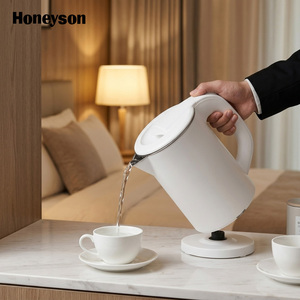
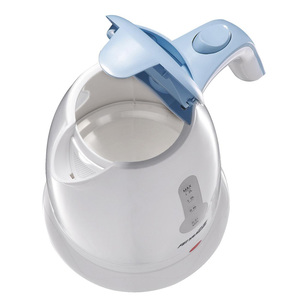
Modern catering equipment—including commercial water boilers and heating kettles—is integrating smart PID temperature controllers, dry-boil safety protection, and dual-layer vacuum insulation. As seen in recent commercial designs, double-wall stainless steel kettles maintain water temperatures for hours without drawing continuous power, drastically reducing standby electrical loads in hotel buffets and catering halls.
Enterprise procurement specifications now frequently mandate minimum post-consumer recycled metal ratios. High-grade AISI 304 and 316 stainless steels are 100% recyclable. Top exporters are closing the loop by re-melting factory offcuts and utilizing solar-powered induction furnaces to reduce the carbon footprint per unit produced.
Founded in 1974 by Shri J. Bhawarlal Bohara and driven by Managing Director Mr. Rakesh Bohara, BOHARA Group stands as a premier global manufacturer and exporter of commercial-grade stainless steel cookware, tableware, insulated hotpots, and catering equipment. Headquartered in Dubai, UAE, BOHARA serves commercial importers, hotel suppliers, and wholesale distributors across 50+ countries.
With over 500 active SKUs, full OEM/ODM capabilities, automated precision stamping, and rigorous ISO quality control systems, BOHARA guarantees uncompromised durability, elegant craftsmanship, and direct factory-to-port logistics.

Clear technical guidance for institutional buyers, wholesale importers, and supply chain managers.
The numbers represent chromium and nickel percentages. 18/10 stainless steel contains 18% chromium and 10% nickel, offering maximum resistance to pitting, chemical corrosion, and food acid staining—ideal for cooking pot bodies. 18/0 contains 18% chromium and 0% nickel, making it magnetic. Exporters use 18/0 (AISI 430) on the bottom exterior layer of multi-clad cookware to ensure seamless energy induction on modern electric ranges.
Impact bonding subjects the vessel, aluminum disc core, and stainless magnetic plate to extreme hydraulic friction pressure (over 2,500 tons) without using flux material. This creates a solid metallurgical bond. Traditional brazed caps often contain micro-voids that expand during rapid heating and cooling cycles, causing the bottom plate to detach over time under commercial kitchen stress.
Standard OEM/ODM orders requiring custom laser etching, branded color box packaging, or specific handle fitments generally carry an MOQ starting at 500 to 1,000 units per SKU, depending on vessel volume. For standardized, active production catalog items, flexible order sizes can be consolidated across mixed container shipments.
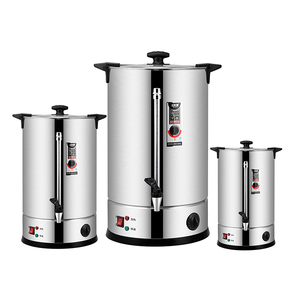
Commercial-grade electric water boilers utilize double-wall stainless steel construction with an insulated air core or polyurethane thermal layer. Integrated digital thermostatic sensors automatically cycle heating elements on and off, preventing continuous high-wattage draw while keeping water at precise target serving temperatures (e.g., 90°C–98°C).
Reputable commercial exporters provide Spectrometer Material Test Reports (MTC) verifying raw material chemical compositions, along with independent third-party laboratory test certificates (SGS, TÜV, or Intertek) demonstrating compliance with US FDA 21 CFR 175.300, European Regulation (EC) No 1935/2004, and German LFGB food contact safety requirements.
Yes. Commercial-grade cookware engineered with a 3-ply clad or encapsulated magnetic base is 100% compatible with open flame gas burners, electric radiant coils, halogen glass cooktops, and high-efficiency commercial induction ranges up to 500°F (260°C) oven temperatures.
Connect directly with our engineering and trade export team to request wholesale product catalogs, custom OEM/ODM tooling quotes, and container shipping schedules.