
Engineered for high-volume hospitality, commercial catering, industrial canteens, and institution applications. Built with food-grade stainless steel and advanced thermal efficiency.
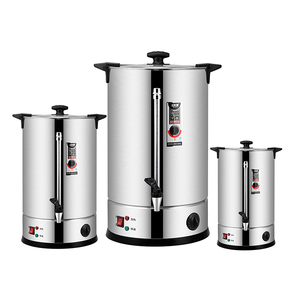
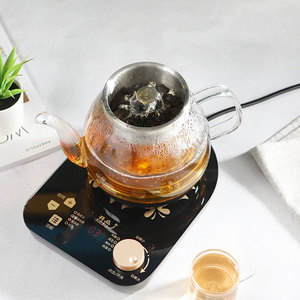
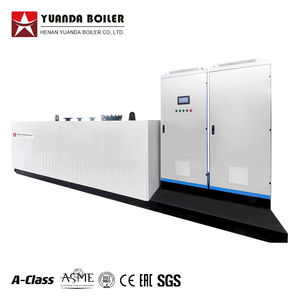
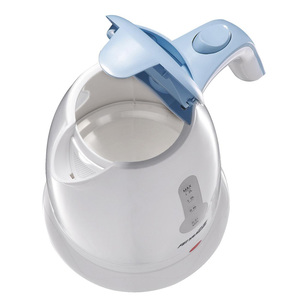
In the modern commercial catering, hospitality, and institutional dining sectors, the demand for continuous, energy-efficient hot water delivery has escalated rapidly. Commercial electric tea urns and water boilers are no longer viewed as simple heating appliances; they are critical capital assets that dictate operational throughput, energy overheads, and beverage quality control. Commercial procurement directors, hotel chain developers, and restaurant equipment distributors require rigorous technical insights when selecting a manufacturing supplier or OEM/ODM partner.
Selecting the ideal commercial electric tea urn boiler factory and supplier requires evaluating key metrics such as thermal retention efficiency, heating element longevity, anti-scale metallurgical coatings, and compliance with international safety protocols (CE, ISO9001, RoHS, ETL). As high-capacity catering environments scale up peak-hour beverage output, unit reliability directly impacts customer satisfaction and operational margins.
Information Gain Metric: Modern commercial electric urns equipped with double-wall vacuum insulation and digital PID temperature regulation reduce standby energy consumption by up to 34% compared to legacy single-wall continuous-boil heating vessels.
When evaluating commercial tea urn boiler factories, technical specifications must transcend basic dimensional capacity. The internal metallurgical makeup and heating topology dictate whether an urn will withstand 10,000 thermal cycles without structural fatigue or scaling failure.
Leading manufacturers utilize food-grade AISI 304 stainless steel as a baseline standard for water reservoirs and outer casings. For aggressive water quality conditions (high mineral content or high salinity environments), premium Grade 316 stainless steel containing 2–3% molybdenum is deployed to eliminate pitting corrosion and stress corrosion cracking.
| Evaluation Parameter | Standard Commercial Grade | Industrial High-Performance Grade | BOHARA Manufacturing Standard |
|---|---|---|---|
| Casing Material | AISI 201 Stainless Steel | AISI 304 Stainless Steel | Heavy-Duty AISI 304 / 316 Brushed SS |
| Heating Element Type | Submerged Spiral Element | Concealed Flat Bottom Element | Concealed 304SS Element w/ Anti-Scale Coating |
| Insulation System | Single Wall (Uninsulated) | Double Wall Air Gap | Double Wall Polyurethane / Vacuum Insulation |
| Thermostatic Control | Bimetallic Snap Disc | NTC Thermistor / Manual Dial | Digital Microcontroller (PID Logic ±1°C) |
| Safety Systems | Basic Thermal Cutoff | Dry-Boil Protection + Thermal Fuse | Triple-Stage Dry-Boil, Overcurrent & Steam Sensor |
Eliminates direct water contact with heating coils, reducing limescale accumulation, simplifying cleaning routines, and extending element service life exponentially.
Integrated automatic shut-off sensors immediately disconnect power if water levels drop below minimum thresholds, preventing catastrophic element burnout and fire hazards.
Micro-step thermostatic regulation keeps water within optimal tea-brewing ranges (80°C–98°C) without continuous rapid boiling, preserving water oxygen levels and reducing energy usage.
As the commercial foodservice industry shifts toward smart facility automation and stringent carbon-neutral standards, procurement teams must align with tea urn manufacturers who invest heavily in next-generation R&D.
Commercial urns integrated with Wi-Fi/Bluetooth microcontrollers allow facility managers to monitor energy consumption, track lime-scale accumulation, and schedule predictive maintenance remotely.
Moving away from legacy constant-boil reservoirs, modern multi-stage flow-through boilers flash-heat water on demand, cutting standby energy loss by up to 50% in high-volume venues.
Post-pandemic hygiene protocols favor optical sensor-activated faucets and push-button solenoid valves, eliminating manual tap contact in self-service breakfast buffets.
Founded in 1974 by Shri J. Bhawarlal Bohara and expanded globally under the leadership of Managing Director Mr. Rakesh Bohara, BOHARA Group has spent over five decades building an unassailable reputation in stainless steel houseware, cookware, and commercial catering equipment manufacturing.
Operating out of prime regional hubs including Dubai, UAE, BOHARA serves commercial importers, wholesale distributors, and hospitality procurement agencies across more than 50 countries.
Established in 1974, BOHARA combines deep metallurgical knowledge with modern automated production lines, delivering structural consistency across large production runs.
With an active distribution footprint in over 50 nations, BOHARA offers full OEM/ODM customization—including voltage compliance, plug configurations, laser branding, and tailored packaging.
Every commercial water boiler and tea urn undergoes 100% high-voltage insulation tests, hydrostatic pressure checks, and dry-boil cutoff validations before leaving the facility.
Supply Chain Assurance: BOHARA maintains direct raw material partnerships with top-tier stainless steel mills, ensuring stable pricing, strict gauge tolerances, and zero material adulteration for international commercial buyers.
Below are the critical technical and commercial questions evaluated by purchasing managers when sourcing commercial electric tea urns and water boilers.
For hotel breakfast buffets and corporate conference centers serving 100–200 guests per hour, a 15L to 20L continuous water boiler is optimal. Industrial canteens or high-volume banquet halls typically deploy 30L to 50L units or high-power 120kW industrial boiler systems capable of continuous recovery rates.
Double-wall stainless steel construction creates a thermal isolation barrier (air or polyurethane insulation) between the inner reservoir and outer shell. This keeps external surface temperatures safe to touch (preventing kitchen burns) while retaining heat internally, reducing electrical draw by 25% to 35% during maintenance cycles.
Concealed elements are mounted beneath the stainless steel base plate rather than submerged inside the water reservoir. This prevents mineral scale from building up directly on the heating wire, makes descaling drastically easier, avoids flavor contamination, and doubles the overall lifespan of the appliance.
Yes. BOHARA provides full OEM manufacturing, customizing operating voltages (110V–120V for North America, 220V–240V for Europe/Asia/Middle East), frequency standards (50Hz/60Hz), and international plug options (Type G, Type C, Type F, Type B) alongside localized safety certifications.
Factories recommend integrating inline water filtration systems (softeners or reverse osmosis) prior to boiler inlet feed. Routine maintenance should include monthly descaling with food-grade citric acid or acetic solution to keep thermostatic sensors accurate and heating transfer unimpeded.
Standard production lead times range between 25 to 35 days post-sample approval. MOQs depend on customization requirements (laser engraving, custom color housing, bespoke packaging), with flexible container-mix options available for established commercial partners.
Looking for competitive factory pricing, custom OEM options, or bulk commercial water boiler quotes? Connect with BOHARA Group's technical export specialists today.