Commercial Product Showcase & Engineering Catalog
Precision-engineered kitchenware, thermal boilers, and commercial oil strainer systems manufactured under certified ISO 9001:2015 quality control.
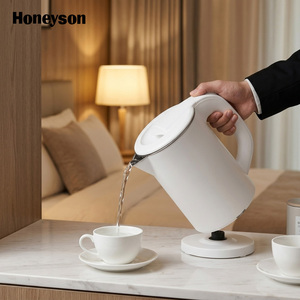
0.8L Cordless Portable Double Wall Electric Kettle Stainless Steel Water Boiler and Tea Pot
Contact Us
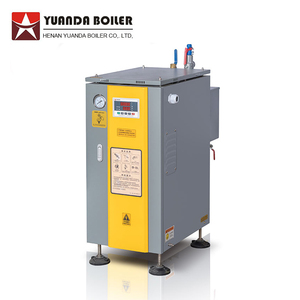
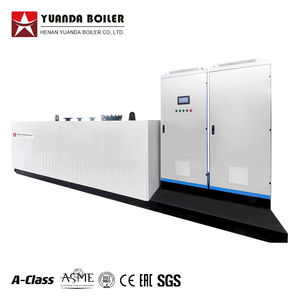
Industrial Small Electric Hot Water Boiler 120 Kw
Contact Us
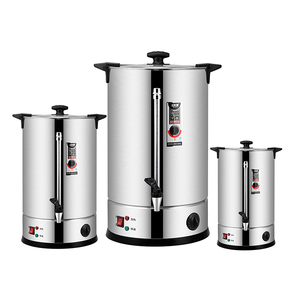
15L 304SS Electric Heating Kettle CE Certification Hot Electrical Water Boiler Catering
Contact Us
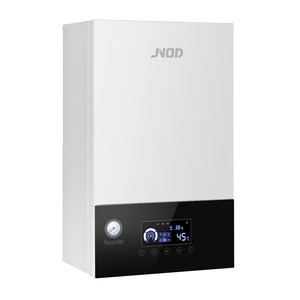
China Wholesale Caldera Electrica OEM Factory Electric Boilers For Central Heating
Contact Us
New Electric Glass Kettle 0.8L Water Heater Boiler Tea Maker with Steaming Rack and Filter Tank
Contact Us
Small Electric Boiler For Heating And Hot Water Commercial System
Contact Us
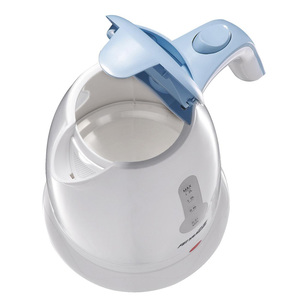
GOOD Quality Electric Water Kettle Plastic Water Boiler With Transparent Water Window
Contact Us
CE Electric Combi Heating Boiler New Double-Circuit Vertical Home & Restaurant Steam Output
Contact Us
50+
Years Manufacturing Heritage
500+
Global B2B Wholesale SKUs
100%
Food Grade Compliance (FDA/LFGB)
Strategic OEM/ODM Enterprise Capabilities & Infrastructure
Decades of metallurgical mastery, advanced robotic deep-drawing tooling, and global supply chain reliability.
Precision Deep-Drawing Metallurgy
Utilizing high-tonnage hydraulic deep-drawing presses to fabricate seamless, single-piece stainless steel oil strainer pots. Eliminates welded seams inside the vessel to prevent bacterial accumulation and structural micro-cracks under severe thermal stress.
Custom Die Tooling & Prototyping
Our in-house CAD/CAM toolmakers provide end-to-end ODM engineering—from rapid 3D printing of ergonomic handles to precision CNC tooling dies for custom capacities ranging from 0.8L to 5.0L within 15 business days.
Global Logistics & Export Reach
Leveraging central distribution centers in Dubai, UAE, and primary manufacturing plants, we streamline bulk oceanic container freight, customs documentation, and duty-free transshipment to over 50 countries across North America, Europe, and the Middle East.
Core Engineering Commitment: Founded upon prized values of metallurgical integrity, precision tolerance, and uncompromising food safety, BOHARA Group ensures every OEM/ODM stainless steel oil strainer pot exceeds international ASTM, FDA, and LFGB standards for commercial kitchen deployment.
Engineering Whitepaper: Technical Specifications & Material Comparison
Selecting the optimal stainless steel alloy and mesh architecture is critical for commercial oil filtration longevity. Below is an engineering comparison matrix designed for wholesale buyers, brand owners, and commercial kitchen procurement managers.
| Material Grade |
Chemical Composition |
Pitting Resistance (PREN) |
Recommended Application |
Corrosion Resistance Score |
| AISI 304 (18/8) |
18% Cr, 8% Ni, Balance Fe |
18.0 - 20.0 |
Standard Commercial Kitchen Oil Storage & Light Filtration |
High (Standard Food Contact) |
| AISI 316L (18/10/2) |
17% Cr, 12% Ni, 2.5% Mo |
23.0 - 25.0 |
Heavy Industrial Frying, High Salinity Food Processing |
Exceptional (Pitting Resistant) |
| AISI 430 (Ferritic) |
16% Cr, 0% Ni |
16.0 |
Induction-Compatible External Base Plates |
Moderate (Dry Storage Outer Shells) |
| Multi-Ply Clad (304-Alu-430) |
Tri-Ply Composite Structure |
Variable Surface Dependent |
Rapid Heat Retention Strainer Pots for Direct Re-Heating |
Superior Thermal Uniformity |
Technical Deep-Dive: Oleophobic Filtration & Mesh Density Engineering
Cooking oil degradation in commercial fryers generates free fatty acids (FFAs), polar compounds, and carbonized micro-particulates. Standard wire meshes fail to capture particles below 200 microns, leading to premature oil smoke point degradation and altered food flavor profiles.
Our OEM/ODM oil strainer pots incorporate engineered 80-mesh to 120-mesh fine woven stainless steel filters constructed from ultra-durable AISI 304 wire. This precise aperture size (177 to 250 microns) effectively isolates microscopic food residues without clogging high-viscosity thermal oils at temperatures up to 220°C (428°F).
- Micro-Twill Weave Construction: Enhances mechanical tensile strength during high-pressure spatula scraping.
- Electro-Polished Surface Passivation: Removes surface iron contaminants, elevating the chromium-oxide protective layer for superior resistance against acidic oil breakdowns.
- Ergonomic Anti-Scald Thermal Barriers: Hollow stainless steel or hollow silicone-coated handles engineered to keep handle surface temperatures below 45°C during hot oil pouring operations.
- Precision Drip-Free Pouring Spout: Die-formed geometry prevents oil back-beading down the container wall, keeping commercial prep counters clean and reducing slip hazards.
Global Future Procurement Trends for Stainless Steel Kitchenware (2025–2030)
The global commercial kitchenware market is experiencing a profound paradigm shift driven by commercial sustainability mandates, rising edible oil prices, and strict health regulations regarding thermally degraded oils. As a leading manufacturer and exporter, we highlight key commercial macro-trends shaping product procurement over the coming decade.
1. Economic Oil Conservation & Extended Yield
With global cooking oil prices fluctuating sharply, commercial restaurants and food processors are investing heavily in closed-loop oil filtration hardware. Implementing high-efficiency 304/316 oil strainer pots extends oil usability by up to 35%, drastically lowering operational expenditure.
2. Elimination of Toxic Chemical Coatings
Global regulatory bodies (including the US FDA and European EFSA) are accelerating restrictions on PFAS, PFOA, and fluoropolymer coatings. Procurement is shifting entirely toward 100% mechanical electro-polished stainless steel surfaces that offer non-stick oleophobic performance without toxic degradation.
3. Smart Induction-Ready Hybrid Strainers
Modern kitchen workflows demand strainer pots that double as direct warming vessels. Emerging market demand favors encapsulate magnetic bottom bases (AISI 430 clad steel) allowing immediate re-heating on high-frequency commercial induction cooktops.
4. Sustainable & Recyclable Supply Chains
Institutional buyers are enforcing strict ESG criteria. Stainless steel is 100% infinitely recyclable without quality loss. OEM buyers prioritize factories utilizing scrap-recycled steel melts and zero-discharge electro-polishing plants.
Industry Manufacturing Advancements: Automated Robotic Deep-Drawing
Traditional multi-stage metal spinning often creates variable wall thickness, resulting in structural weak points near the base seam. Advanced OEM factories now employ multi-stage progressive hydraulic deep-drawing with integrated laser trimming. This process yields uniform wall thickness (0.6mm to 1.0mm) across the entire vessel geometry, drastically reducing weight while maximizing structural impact resistance under commercial kitchen abuse.
Furthermore, laser-welded handle attachment plates eliminate internal rivet heads. Rivet heads are notorious points of grease build-up and bacterial harbor; rivetless smooth interior walls allow instant sanitization in automated commercial dishwashers.
Comprehensive OEM/ODM Customization Matrix & Contract Services
We provide full white-label and private-label manufacturing capabilities for global distributors, kitchenware brands, and retail chain buyers. Our engineering team assists at every phase of product lifecycle management.
Custom Branding & Aesthetics
Options include fiber laser etching of logos, precision embossing/debossing dies, PVD titanium gold/rose gold vacuum plating, and high-durability heat-resistant exterior powder coatings.
Capacity & Geometry Tailoring
Custom vessel sizing from compact 0.8-liter domestic models to heavy-duty 5.0-liter commercial catering storage pots, complete with graduated internal volumetric measurement markings.
Bespoke Packaging Solutions
E-commerce drop-ship drop-test compliant 5-ply corrugated mailer boxes, full-color litho-printed retail gift packaging, and plastic-free biodegradable internal molded pulp trays.
Quality Control Assurance: Every batch undergoes rigorous quality validation including salt spray testing (ASTM B117 > 96 Hours), 100% liquid leak detection, optical spectrometer alloy composition analysis, and dishwasher thermal shock cycling.
Procurement & Technical FAQ for Commercial Buyers
Direct answers to essential technical, logistics, and contract manufacturing questions for importers and distributors.
What are the primary differences between 304 and 316 stainless steel for oil strainer pots?
AISI 304 (18/8) stainless steel contains 18% chromium and 8% nickel, offering exceptional resistance to oxidation and organic acids present in standard cooking oils. It is the industry standard for commercial and domestic cookware. AISI 316 contains an additional 2-3% molybdenum, which dramatically elevates resistance to chloride corrosion and pitting. For high-salinity deep frying operations (such as commercial seafood processing) or marine environments, 316 stainless steel is recommended for long-term durability.
What mesh size is optimal for filtering commercial cooking oil?
An 80-mesh (approx. 177 to 200 micron aperture) is widely considered the optimal balance for hot cooking oil. Finer meshes (such as 200-mesh) filter extremely small carbon particles but clog rapidly with cold or high-viscosity oils. Coarser meshes (40 to 60 mesh) allow burnt food crumbs to pass through. Our standard strainers utilize a reinforced 80-mesh AISI 304 stainless steel weave designed for high flow rates and easy sediment clearance.
What are the minimum order quantities (MOQ) for custom OEM/ODM orders?
For standard catalog models with custom laser-etched branding, our MOQ starts at 1,000 units per model. For bespoke custom-tooled shapes, specialized capacity dimensions, or custom PVD color coatings, our standard production MOQ is 3,000 units. We offer flexible pilot-batch production trials for established global distributors upon technical drawing review.
How do you ensure food safety and regulatory compliance for global markets?
All materials utilized in our manufacturing process undergo third-party spectroscopic analysis (SGS / TUV) to guarantee zero lead, cadmium, or heavy metal contamination. Our final products fully comply with US FDA 21 CFR 175.300, European Regulation (EC) No 1935/2004, German LFGB, and French DGCCRF food-contact hygiene standards.
What is the typical production and tooling lead time for OEM projects?
Rapid 3D CAD modeling and prototype samples are completed within 5-7 working days. Once the engineering prototype is approved, production die tooling takes approximately 20 to 25 days. Mass production lead time is typically 30 to 35 days following deposit confirmation and art design sign-off.
Can the oil strainer pots be used directly on induction stovetops?
Standard single-ply 304 stainless steel is non-magnetic and will not heat up on standard induction cooktops. However, we offer an optional encapsulated magnetic bottom base (incorporating an AISI 430 ferritic stainless steel plate bonded via high-pressure thermal impact). This optional feature makes the strainer pot 100% induction-compatible for direct thermal heating.
How are handles attached to prevent oil leakage and handle breakage?
We utilize high-frequency capacitor discharge multi-point spot welding or continuous laser welding to attach reinforced mounting brackets. This creates a weld joint stronger than the parent metal itself, tested to withstand over 50 kg of static vertical pull force without damaging the vessel body or leaking oil.
What export packaging standards are implemented for long-distance maritime transport?
To prevent scratch damage and ambient humidity corrosion during ocean container transit, each oil pot is sealed in a moisture-barrier polybag, protected by custom EPE foam edge caps, and nested in a 5-ply double-wall corrugated inner carton. Master shipping cartons are reinforced with edge boards and palletized with stretch wrapping.
Partner with a World-Class OEM/ODM Manufacturer
Elevate your product portfolio with precision-engineered stainless steel oil strainer pots, commercial boilers, and premium kitchenware solutions. Contact our engineering team today for factory-direct quotes and custom prototyping.