Latest news, expert buying guides, and technical insights on commercial stainless steel cookware and houseware manufacturing.
OEM/ODM Double Wall Thermal Hotpot Set Manufacturers & Suppliers
Engineering Commercial-Grade Insulated Food Ware, Water Boilers, and Thermal Preservation Systems for Global Distributors & Hospitality Brands.
Featured Thermal Hotpots & Commercial Boilers
Explore our certified range of double-wall insulated food casseroles, electric water boilers, and commercial thermal equipment engineered for B2B wholesale orders.
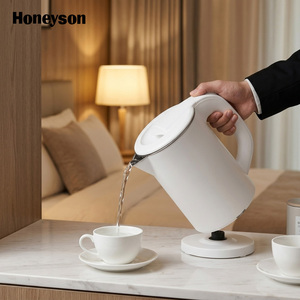
0.8L Cordless Portable Double Wall Electric Kettle Stainless Steel Water Boiler and Tea Pot
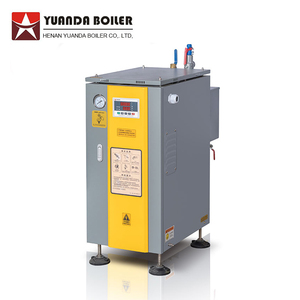
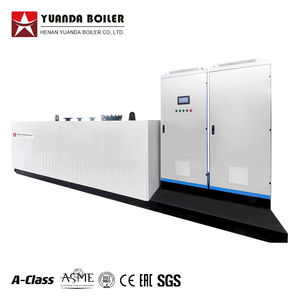
Industrial Small Electric Hot Water Boiler 120 Kw Commercial Grade System
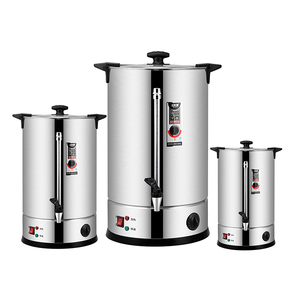
15L 304SS Electric Heating Kettle CE Certified Catering Water Boiler
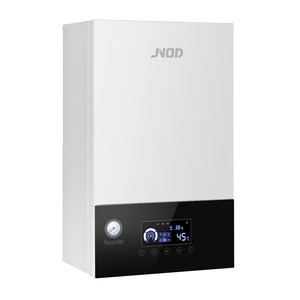
China Wholesale Caldera Electrica OEM Factory Electric Boilers For Central Heating
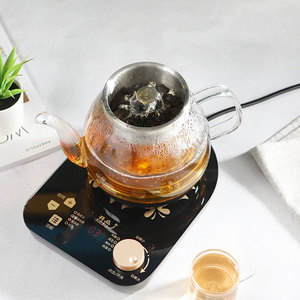
New Electric Glass Kettle 0.8L Water Heater Boiler Tea Maker with Steaming Rack
Small Electric Boiler For High-Efficiency Space Heating And Hot Water Systems
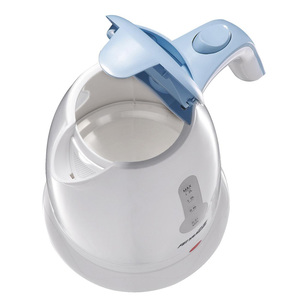
Commercial Grade Electric Water Kettle Plastic Water Boiler With Level Indicator
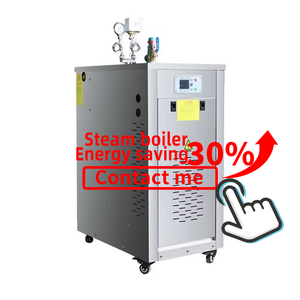
CE Electric Combi Heating Boiler Double-Circuit Vertical Commercial Steam Boiler
50+
Years Manufacturing Excellence
50+
Global Export Markets
500+
Active Product SKUs
99.4%
OEM QA Compliance Rate
Industry Whitepaper: Thermal Engineering & Vacuum Metallurgy in Hotpot Manufacturing
In modern commercial catering, global food service distribution, and consumer houseware markets, the procurement of OEM/ODM double wall thermal hotpot sets requires deep technical evaluation beyond surface aesthetics. Thermal insulation performance relies heavily on precise thermodynamic isolation, metallurgical purity, and high-density poly-foam or vacuum cavity sealing technology. As global supply chains demand longer heat retention cycles, energy savings, and strict food safety compliance, understanding the structural dynamics of double-wall stainless steel casseroles and hotpot vessels is paramount for B2B buyers.
Technical Consensus: Thermal decay in insulated serving vessels occurs through three thermodynamic vectors: conductive transfer across steel contact points, convective air currents within internal voids, and radiant infrared emissions from hot food surfaces. Engineering high-gain thermal hotpots requires mitigation of all three channels simultaneously.
The choice of raw alloy dictates both structural longevity and chemical neutrality under acidic or high-salinity culinary conditions. Leading OEM manufacturers implement strict spectroscopic raw material verification before stamping:
Inner Liner Integrity (AISI 304 Stainless Steel): Composed of 18% Chromium and 8% Nickel, SUS304 offers superior oxidation resistance, non-reactive food contact properties, and structural resilience against thermal shock up to 800°C. It prevents metal leaching and preserves organic food flavor profiles during extended hold times (up to 6 hours above 65°C).
Exterior Shell Options (SUS201 / SUS304 / Chrome Plated): While outer casings can utilize SUS201 to minimize material cost in price-sensitive retail channels, premium commercial catering lines utilize full 304 stainless steel shells or PVD (Physical Vapor Deposition) decorative gold plating to withstand repeated commercial dishwasher sterilization cycles.
Passivation & Electrolytic Polishing: Modern ODM production incorporates acid passivation treatments to form an invisible, ultra-durable chromium oxide layer. This eliminates microscopic surface pits where bacteria might accumulate, meeting stringent FDA (US) and LFGB (Germany) hygienic directives.
2. Thermal Insulation Technologies: PUF Injection vs. Deep Vacuum Cavities
The thermal efficiency of a double-wall hotpot set is primarily determined by the insulating medium housed within the inter-wall space:
Polyurethane Foam (PUF) High-Density Injection: Standard commercial thermal hotpots utilize high-pressure polyurethane foam injection between the inner and outer walls. With a foam density ranging between 38 kg/m³ and 45 kg/m³, conductive heat transfer is reduced to minimal levels ($k \approx 0.022 \text{ W/m·K}$). This construction delivers exceptional physical crush resistance and cost-efficient heat retention for 4 to 8 hours.
Deep Vacuum Insulation (High-Thermal Barrier): Premium double-wall thermal hotpots extract air from the inter-wall chamber down to pressures below $10^{-3} \text{ Pa}$. By removing gaseous molecules, convective and conductive heat transfer is virtually eliminated, extending heat retention beyond 12 hours while maintaining a cool outer surface touch.
3. Technical Performance Metrics: Heat Retention & Material Comparison
Below is a comparative breakdown of key engineering specifications evaluating various insulated hotpot structural configurations under standardized laboratory testing ($23^\circ\text{C}$ ambient temp, initial water temperature $98^\circ\text{C}$):
Thermal Architecture
Material Spec (Inner/Outer)
Insulation Core
4-Hour Temp (°C)
8-Hour Temp (°C)
B2B Target Application
Standard Double Wall
SUS304 / SUS201
Air Gap (Low Polyfill)
58°C
42°C
Budget Retail & Promotional Sets
Commercial Hotpot Set
SUS304 / SUS304
High-Density PUF (42 kg/m³)
76°C
64°C
Hotel Buffets & Banquet Catering
Ultra-Vacuum Casserole
SUS304 / PVD Gold SUS304
Deep Vacuum ($<10^{-3} \text{ Pa}$)
86°C
74°C
Luxury Hospitality & Fine Dining
Hybrid Electric Hotpot
SUS304 / ABS Thermal Shell
PUF + PTC Heating Element
90°C (Active)
82°C (Active)
Buffet Stations & Commercial Kitchens
OEM & ODM Customization Matrix: Engineered for Global Procurement
As a specialized manufacturer with origins tracing back to 1974, BOHARA Group delivers comprehensive OEM (Original Equipment Manufacturing) and ODM (Original Design Manufacturing) solutions. Operating from strategic distribution and manufacturing centers, including Dubai, UAE, BOHARA supports global brands, department stores, and institutional buyers in constructing customized houseware product lines.
Custom Tooling & Volumetric Sizing
Full CAD/CAM mold customization supporting hotpot capacities from 0.8 Liters up to 15.0 Liters. Specialized deep-drawing tooling allows custom sidewall contours, stackable rim profiles, and ergonomic side-handle integration.
Surface Aesthetics & Decorative Finish
Advanced surface processing including High-Mirror Polish, Satin Brushed Finish, PVD Titanium Gold Plating, Traditional Arabesque Engravings, and Heat-Resistant Exterior Color Coatings tailored for Middle Eastern, European, and Asian market tastes.
B2B Branding & Packaging Automation
Custom laser-engraved logos, stamped brand insignia, custom-molded silicone rim seals, and multi-lingual retail gift box packaging engineered to pass ISTA 3A drop testing for international sea and air freight.
The BOHARA OEM/ODM Production Workflow
To maintain absolute consistency across multi-container orders, BOHARA adheres to a five-stage quality control protocol:
Phase 1: Conceptual CAD Drafting & 3D Prototyping: Rapid 3D printing of handle configurations, lid locking mechanisms, and base alignment.
Phase 2: Metallurgical & Stamping Quality Control: Automatic deep-drawing hydraulic presses shape the inner SUS304 basin without micro-fracturing or stress thinning.
Phase 3: Automated PUF Injection & Curing: Computerized metering systems inject eco-friendly, zero-ODP (Ozone Depletion Potential) polyurethane foam into the double-wall space, curing under uniform temperature conditions.
Phase 4: Leakage & Thermal Retention Testing: 100% batch testing using infrared thermal imaging to ensure zero thermal bridge leakage along structural welds and handle riveted joints.
Phase 5: Final Inspection & Compliance Certification: Pre-shipment audit verifying adherence to ISO 9001:2015, CE, RoHS, and food-grade hygiene standards.
Future Sourcing & Technology Trends in Double Wall Thermal Ware (2025–2030)
As the international catering, hospitality, and home cookware sectors evolve, B2B buyers must align their procurement strategies with emerging market forces. The thermal serving ware landscape is undergoing key technological shifts driven by sustainability requirements, smart technology integration, and shifting consumer lifestyle choices.
1. Integration of Smart IoT Temperature Monitoring
The convergence of commercial catering equipment and digital technology has created a rapid rise in demand for Smart Thermal Hotpots. Next-generation double-wall casseroles feature ultra-low-power micro-LED displays seamlessly embedded into the lid handle. These sensors provide real-time digital readouts of interior food temperatures without requiring lid removal, thereby preserving internal steam, maintaining heat integrity, and guaranteeing compliance with HACCP food safety standards in hotel buffets.
2. Transition to Circular Metallurgy & Eco-Friendly Insulation
Global environmental regulations, particularly within the EU and North American markets, are pushing procurement teams toward sustainable cookware supply chains. Leading OEM factories are replacing traditional blow-agent polyurethane foams with 100% recyclable, zero-emissions thermal core materials. Furthermore, the use of certified recycled food-grade stainless steel (scrapped industrial steel re-smelted under strict chemical monitoring) allows brands to lower their Scope 3 carbon footprint while maintaining high structural performance.
3. Rise of Dual-Circuit Active/Passive Hybrid Warmers
In high-end commercial catering, static passive hotpots are increasingly paired with low-wattage, magnetic induction bases or detachable PTC electric elements (as seen in modern electric combi boilers and hot water kettles). These hybrid systems operate as passive double-wall insulated vessels during transportation and serving, but can be plugged into low-voltage power sources to hold exact serving temperatures indefinitely during lengthy banquet events.
4. Regional Aesthetic Fusion & Modular Component Systems
B2B distributors are moving away from generic visual designs in favor of culturally tailored visual motifs. In Middle Eastern and South Asian markets, traditional gold-accented, vintage-engraved thermal sets (such as classic Sahar and Samiya hotpot lines) dominate corporate and festive gift sectors. Conversely, Western commercial markets demand modular, stackable, minimalist satin-finished units designed for space-saving storage in high-density hotel kitchens.
Essential guidance for commercial buyers, wholesale importers, and hospitality supply officers when evaluating thermal hotpot manufacturing contracts.
Q1: What is the Minimum Order Quantity (MOQ) for custom OEM/ODM thermal hotpot sets?
Our standard MOQ for custom color finishes (such as PVD Gold, Rose Gold, or custom RAL lacquer coatings) and bespoke laser branding starts at 500 sets per size. For fully customized mold development (new shapes or volumetric dimensions), MOQ typically ranges from 1,000 to 3,000 units depending on tooling complexity.
Q2: How do you verify food safety compliance for international markets?
All inner stainless steel liners are manufactured using certified grade SUS304 steel. We provide third-party laboratory test reports (SGS, TUV, Intertek) confirming compliance with US FDA 21 CFR 175.300, EU Framework Regulation (EC) No 1935/2004, and German LFGB standards. Raw material mill test certificates (MTC) accompany every production batch.
Q3: What is the difference between PU foam insulation and vacuum insulation in hotpot design?
Polyurethane (PU) foam insulation is injected into the double-wall gap, providing excellent structural rigidity and heat retention for 4 to 8 hours at an economical cost structure ideal for catering casseroles. Vacuum insulation evacuates all air from the gap, achieving 10 to 14 hours of thermal retention with a lighter overall weight, making it suitable for premium consumer cookware lines.
Q4: Can double-wall thermal hotpots be placed directly on induction or gas stovetops?
No. Passive double-wall thermal hotpots are designed strictly for heat preservation, serving, and transport—not direct cooking. Placing a sealed double-wall vessel over direct flame or induction stovetops will expand the trapped air or insulation layer within the inter-wall cavity, leading to irreversible structural deformation or rupture. For cooking applications, inquire about our 3-Ply single-wall cookware ranges.
Q5: What lid locking technologies prevent thermal leakage in transit?
We offer three primary lid sealing mechanisms: 1) Twist-lock bayonet lids with food-grade silicone gaskets for leak-proof transport, 2) Heavy-duty stainless steel latch-down clamps designed for commercial catering crates, and 3) Glass-windowed drop-on lids featuring steam-vent control valves for buffet presentation.
Q6: How are fragile gold finishes and exterior plating protected against commercial dishwashing?
Standard electroplating can degrade under high-alkaline commercial detergents. For commercial catering clients, we utilize PVD (Physical Vapor Deposition) titanium coating, which bonds at an atomic level to the stainless steel substrate. This yields a surface hardness three times greater than standard chrome, rendering the gold finish resistant to scratch marks and repeated dishwashing cycles.
Q7: What lead time is required for OEM sample production and mass shipment?
Customized OEM samples with logo printing and custom surface colors are delivered within 7 to 10 working days. Full container load (FCL) mass production orders are typically fulfilled within 30 to 45 days post sample approval and deposit confirmation.
Q8: How does BOHARA support bulk distribution logistics for regional wholesalers?
Headquartered strategically in Dubai, UAE, with established global manufacturing facilities, BOHARA Group leverages streamlined logistics hubs for rapid re-export across the Middle East, Africa, Europe, and the Americas. We handle FOB, CIF, or DDP shipping terms based on buyer preferences.
Partner with a Trusted Global Thermal Ware Manufacturer
Whether you are developing a proprietary retail houseware line, outfitting a international hotel chain, or sourcing commercial catering water boilers, BOHARA Group offers five decades of proven engineering expertise, uncompromising quality control, and competitive direct-from-factory pricing.