
CE Certified, Food-Contact Safe Decorative Metal Dishes & Premium Catering Equipment



In the rapidly expanding global hospitality, luxury dining, and premium home decor sectors, procurement directors and commercial importers face a sophisticated landscape. Sourcing CE Certified Decorative Metal Fruit Candy Dishes requires a delicate balance between structural aesthetics, metallurgical integrity, regulatory compliance, and economic supply chain efficiency. Decorative food presentation hardware serves not only as an aesthetic centerpiece in five-star hotel buffets, banquets, and high-end retail catalogs, but also as a direct food-contact surface subject to stringent European Union and international safety mandates.
Historically, the decorative metal dish segment was dominated by cast zinc alloys and uncertified electroplated brass. However, shifts in consumer health awareness, combined with aggressive regulatory enforcement by authorities such as the EU Regulation (EC) No 1935/2004 on materials intended to come into contact with food, have transformed the procurement paradigm. Modern buyers require suppliers who possess robust manufacturing infrastructure, certified non-toxic metallurgical treatments, advanced Physical Vapor Deposition (PVD) gold/rose-gold finishing capabilities, and full ISO 9001:2015 quality management compliance.
Key Procurement Insight: The CE mark on decorative metal fruit and candy dishes serves as a verified declaration that the product complies with applicable European health, safety, and environmental protection legislation. When purchasing metallic servingware destined for fruit and confectioneries (which often contain acidic juices or sugar crystallizations), ensuring heavy-metal migration limits (Lead, Cadmium, Nickel, Chromium) meet EU Directive requirements is critical to mitigating compliance risk.
The structural longevity and hygienic compliance of decorative fruit candy dishes stem fundamentally from substrate engineering. Contemporary high-end tableware manufacturers are transitioning from low-grade carbon steel or unstable zinc die-casts to high-purity Austenitic Stainless Steel alloys, predominantly AISI 304 (18/8 Chrome-Nickel) and AISI 316 (18/10 Chrome-Nickel-Molybdenum).
Fruit dishes present a unique chemical challenge due to prolonged contact with organic acids—such as citric acid in citrus fruits, malic acid in apples, and tartaric acid in grapes. Lower-grade alloys exposed to acidic environment suffer micro-pitting corrosion, leading to metallic leaching and tarnishing of decorative surfaces. By engineering serving bowls with certified SS304 or SS316 substrates, suppliers guarantee high passive chromium-oxide film integrity. This structural passivation layer prevents chemical reactivity, maintaining a hygienic, flavor-neutral barrier regardless of fruit acid concentration or candy sugar degradation.
Surface finishing has undergone a technological revolution. Traditional galvanic gold electroplating often relies on hazardous chemical baths (including cyanide compounds) and yields thin, porous decorative layers subject to flaking, scratching, and rapid oxidation under commercial dishwasher cycles.
Physical Vapor Deposition bonds Titanium Nitride (TiN) at a molecular level under high vacuum, providing 10x greater scratch resistance than galvanic plating.
PVD coatings emit zero volatile organic compounds (VOCs) and contain no harmful heavy metal residues, meeting strict REACH & EU food contact standards.
Engineered to withstand temperatures up to 300°C without discoloration, making dishes fully compatible with commercial sanitation tunnels.
Leading exporters now utilize state-of-the-art PVD vacuum chambers to deposit Titanium Nitride (TiN) or Zirconium Nitride (ZrN) coatings onto stainless steel fruit bowls. This produces lustrous Champagne Gold, Rose Gold, Royal Brass, and Mirror Black finishes with hardness ratings exceeding 2000 HV (Vickers Hardness), ensuring decorative tableware retains its opulent aesthetic over thousands of banquet catering cycles.
To assist procurement managers and wholesale buyers in evaluating competitive product offerings, the following technical comparison details structural performance metrics across common tableware metals:
| Evaluation Parameter | SS304 PVD Coated (Recommended) | Zinc Alloy Electroplated | Stamped Aluminum Alloy | Brass Alloy (Uncoated) |
|---|---|---|---|---|
| Corrosion Resistance (Salt Spray 96h) | Grade 10 (No Rust) | Grade 4 (Pitting Occurs) | Grade 6 (Oxidation Risk) | Grade 5 (Tarnishing) |
| EU Food Contact Compliance (EC 1935/2004) | Fully Certified (CE Verified) | High Lead Release Risk | Requires Anodized Seal | Copper Migration Risk |
| Surface Hardness (Vickers HV) | 2200 - 2500 HV | 150 - 200 HV | 80 - 120 HV | 180 - 220 HV |
| Dishwasher Machine Safe | Yes (1000+ Cycles) | No (Plating Flakes) | Conditional | No (Requires Hand Polish) |
| Total Cost of Ownership (3-Year Commercial) | Lowest (Durable) | High (Frequent Replacement) | Medium | High (Maintenance Cost) |
The global commercial market for decorative serving dishes is experiencing rapid evolution driven by three primary commercial forces: environmental sustainability directives, demand for multi-functional modular serving hardware, and supply chain diversification.
Hotel banquet managers and event caterers are demanding space-efficient tableware solutions. Future candy dish designs feature modular tiering systems—allowing individual bowls to function as standalone fruit platters or stack into 2-tier, 3-tier, or multi-faceted dessert towers via interlocking stainless steel central columns. Compact nesting geometries significantly optimize bulk ocean freight volumes, reducing shipping costs per unit for international distributors by up to 30%.
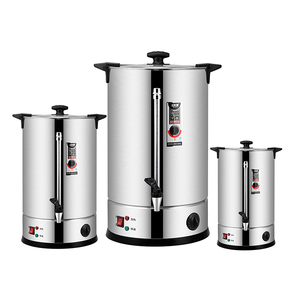
Global buyers are increasingly consolidating orders through established regional distribution hubs. Manufacturing leaders with established infrastructure in key trade corridors (such as Dubai, UAE) provide global importers with significant logistics flexibility, reduced ocean transit times to European and African ports, and streamlined customs clearances. Re-export hubs allow B2B buyers to order mixed container loads combining decorative candy dishes, insulated hotpots, commercial water boilers, and heavy-duty cookware under a single bill of lading.
In post-pandemic hospitality environments, surface hygiene is paramount. Next-generation metal fruit dishes incorporate hydrophobic and oleophobic nano-coatings applied atop PVD gold finishes. These micro-coatings minimize fingerprint smudge accumulation in high-traffic buffet settings while inhibiting bacterial colonization (such as E. coli and Staphylococcus aureus) between routine washings.
When sourcing high-volume CE certified metal candy dishes and commercial cateringware, partner credibility and manufacturing history are vital to mitigating supply risks. Established in 1974 by Shri J. Bhawarlal Bohara, the BOHARA Group has grown over five decades from a pioneering workshop into an international manufacturer and exporter of stainless steel houseware, tableware, and commercial catering equipment.
Under the executive leadership of Managing Director Mr. Rakesh Bohara and the technological expansions introduced by Mr. Vijayraj Bohara, BOHARA Group operates with an unwavering dedication to uncompromised quality, precision craftsmanship, and commercial integrity.
Five decades of continuous operation since 1974 guarantees deep metallurgical expertise, refined stamping processes, and proven manufacturing stability.
Supplying commercial importers, wholesale distributors, and hotel chains across Europe, the Middle East, Africa, and the Americas.
Full custom product development including tool making, laser branding, customized packaging, and specific PVD color tone matching.
Request factory-direct pricing, custom OEM quotes, product catalogs, or certification documentation. Our global export team responds within 24 business hours.