
Knowledge & Industry Updates

BOHARA Group Blog & Insights

Latest news, expert buying guides, and technical insights on commercial stainless steel cookware and houseware manufacturing.

0%

Selecting a reliable Gold Plated Insulated Hotpot manufacturer requires more than a polished exterior. The finish may attract attention, but thermal performance, food-contact materials, and production control determine real value. A well-made hotpot should keep soup warm during service, protect the inner liner, and remain comfortable to carry. Its gold surface should also resist early fading, uneven color, and visible scratches under normal use.

Dr. Ben Chapman, a food safety specialist, often frames the subject clearly: “Food safety is about managing risk.” That principle belongs at the center of every manufacturer comparison. Strong suppliers should explain their insulation structure, liner material, sealing process, and quality inspections. They should provide practical evidence, such as heat-retention test results, material documentation, and sample evaluations. Look closely.

For buyers, experience matters. A factory may offer attractive catalogs, yet struggle with lid fit, plating consistency, or large-order stability. Request a production sample. Check the hinge, handle, rim, and inner surface by hand. Ask how defects are recorded and corrected. These small details reveal manufacturing discipline.

This guide introduces leading Gold Plated Insulated Hotpot manufacturers through a practical lens. It considers design capability, customization, material transparency, delivery reliability, and after-sales communication. The ranking is not absolute. Product needs differ.

Some manufacturers excel in luxury presentation. Others perform better in commercial durability or private-label production. A careful buyer should compare evidence, not promises. Even experienced purchasers can overlook minor weaknesses when the gold finish looks impressive. That is why measured testing, clear specifications, and honest supplier conversations remain essential.
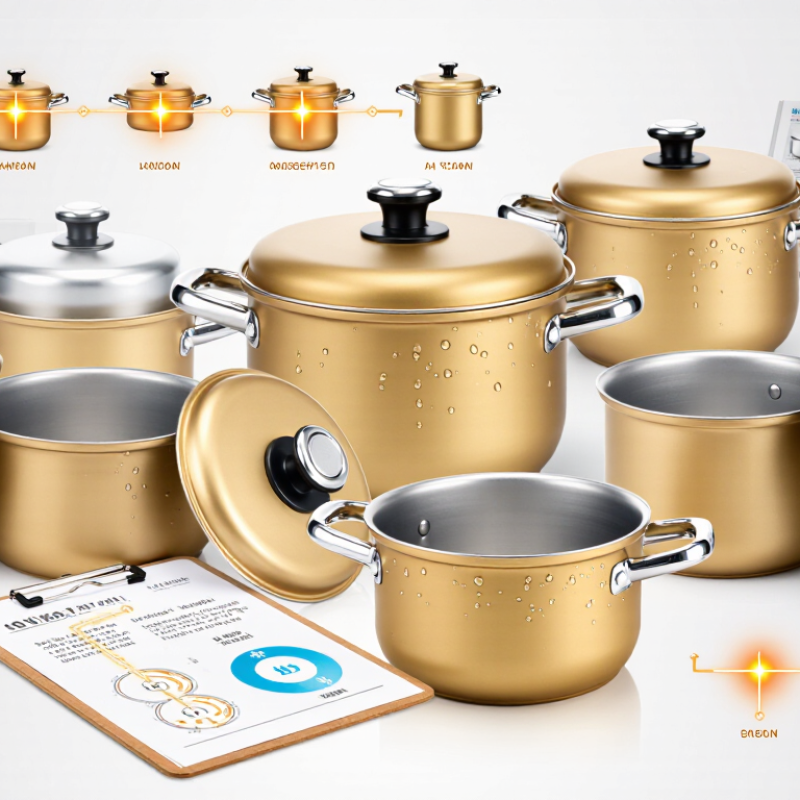
Top Gold Plated Insulated Hotpot Manufacturers

How Gold-Plated Insulated Hotpots Combine 304 Stainless Steel and Vacuum Layers

Top Gold Plated Insulated Hotpot Manufacturers

Gold-plated insulated hotpots combine 304 stainless steel with a sealed vacuum layer. The 304 grade typically contains about 18% chromium and 8% nickel. This composition supports corrosion resistance and repeated kitchen use.

World Stainless reported approximately 58.4 million tonnes of global crude stainless steel production in 2023. That scale reflects strong industrial confidence in stainless materials.

The vacuum space reduces heat transfer through conduction and convection. A reflective metal surface can also limit radiant heat movement. The U.S. Department of Energy identifies vacuum insulation as an effective method for improving thermal resistance.

In practical use, soup remains warm while the outer wall feels cooler. A well-made hotpot should also keep its lid aligned, because small gaps can weaken heat retention.

The gold plating is mainly decorative. It requires careful control over surface preparation, coating thickness, and adhesion. Thermal cycling may expose weak plating, especially around handles and lid edges.

I would not treat every gold finish as equal. Some products look impressive but offer limited insulation performance.

Manufacturers should verify temperature retention, vacuum stability, coating adhesion, and food-contact safety through documented testing. ASTM stainless-steel guidance can support material verification, although real kitchen conditions remain less predictable.

That is the difficult part. Even excellent laboratory results cannot fully represent daily drops, washing, and repeated heating.

Gold Plating Standards: 18K–24K Finishes and 0.05–2.5 μm Coating Thickness

Gold-plated insulated hotpot manufacturers should define gold quality and coating thickness separately. An 18K finish contains about 75% gold, while 24K gold is typically near 99.9% purity. Higher karat improves color consistency, but it does not automatically improve wear resistance. Alloy design, surface preparation, and bonding layers remain critical.

The 0.05–2.5 μm range needs careful interpretation. A 0.05 μm layer is usually a light decorative flash. It may suit low-contact exterior panels. A 0.5–1.0 μm layer offers a better balance for handles and visible body surfaces. A 2.5 μm coating provides stronger abrasion protection, but it increases cost and may expose defects if polishing is uneven. ASTM B488 can guide electroplated gold specifications, while X-ray fluorescence testing verifies thickness without damaging the product. These standards are references, not automatic cookware approvals.

The World Gold Council reported 305.3 tonnes of gold technology demand in 2023, showing gold’s continuing industrial value. However, hotpot buyers should request batch-level plating records, adhesion tests, and thermal-cycle results. A nickel or palladium barrier can reduce migration and improve adhesion on stainless steel. Interior food-contact surfaces require separate regulatory verification. Too much emphasis on karat can mislead procurement teams. Thickness alone can mislead too. In practical inspections, scratches often begin at rims, hinges, and lid contact points, where design stress is higher than the nominal specification.

Top Gold Plated Insulated Hotpot Manufacturers - Gold Plating Standards: 18K–24K Finishes and 0.05–2.5 μm Coating Thickness

Finish Level Nominal Gold Purity Recommended Gold Coating Thickness Typical Base Material Suitable Hotpot Components Expected Appearance Key Performance Considerations Suggested Verification Method
18K Gold Finish 75.0% gold 0.05–0.25 μm Stainless steel, nickel underplate, or copper-alloy decorative parts Exterior trim, handles, lids, knobs, and decorative bands Warm yellow tone with a slightly deeper color than higher-karat finishes Best suited to decorative surfaces with limited abrasion. A suitable barrier layer can help reduce diffusion from copper or nickel-containing substrates. Gold purity by X-ray fluorescence (XRF); thickness by XRF or metallographic cross-section
18K Enhanced Finish 75.0% gold 0.25–0.50 μm Food-equipment stainless steel with a compatible nickel or palladium barrier layer Frequently touched exterior surfaces and premium decorative panels Uniform, bright yellow-gold finish with improved visual consistency Provides more wear reserve than ultra-thin decorative plating, but it is not intended for direct contact with abrasive utensils or aggressive cleaning compounds. ISO 3497 or ASTM B568 thickness measurement; visual inspection under consistent lighting
20K Gold Finish Approximately 83.3% gold 0.50–0.80 μm Stainless steel or nickel-plated stainless steel Premium exterior shells, rim details, and presentation-focused components Brighter and purer yellow appearance than standard 18K plating Higher gold content can improve color stability. Final corrosion and adhesion performance depends on substrate preparation, underlayers, sealing, and cleaning conditions. XRF composition and thickness testing; adhesion evaluation after thermal and cleaning-cycle testing
22K Gold Finish Approximately 91.7% gold 0.80–1.50 μm Polished stainless steel with an engineered diffusion-barrier layer High-end exterior panels, lid ornaments, rims, and non-contact presentation surfaces Rich, saturated yellow-gold color with a luxury appearance The relatively soft, high-purity finish requires careful handling and should be protected from scouring pads, abrasive powders, and metal-to-metal impact. Gold fineness and thickness by XRF; adhesion and wear checks on representative production parts
24K Gold Finish Approximately 99.9% gold 1.50–2.50 μm Stainless steel with nickel, palladium, or other specified barrier underlayers Luxury decorative exteriors, display-grade lids, and non-abrasive trim Strong, pure yellow-gold appearance with maximum color saturation Very high-purity gold is comparatively soft. This finish is generally more appropriate for decorative, non-food-contact areas unless the complete construction has been validated for the intended use. XRF or cross-section thickness measurement; chemical-resistance, adhesion, and cyclic-cleaning tests
Food-Contact Design Control Specified by the selected alloy and process Process-specific; commonly validated within the selected range Food-grade stainless steel such as commonly used 18/8 or 18/10 grades Interior surfaces, cooking vessels, serving areas, and any component that may contact food Consistent finish without pinholes, blistering, exposed underlayers, or flaking The plating itself does not automatically establish food-contact compliance. The complete article, including substrate, underlayers, chemicals, and intended temperature and cleaning conditions, requires regulatory and migration assessment. Applicable food-contact regulations, supplier declarations, migration testing, visual inspection, and production-batch records
Production Acceptance Standard Within agreed karat tolerance Target thickness ± agreed process tolerance Clean, activated, and dimensionally stable metal substrate All plated components supplied for insulated hotpot assemblies Even color, smooth surface, and no visible bare spots, pits, burns, blisters, cracks, or peeling A complete specification should define sampling plans, minimum local thickness, color tolerance, adhesion requirements, porosity limits, and allowable cosmetic defects. Documented inspection plan using XRF, visual grading, adhesion testing, dimensional checks, and retained production samples

Thermal Performance Metrics: Heat Retention, Vacuum Levels, and Temperature Loss

Top Gold Plated Insulated Hotpot Manufacturers should be judged by measured thermal performance, not surface appearance alone. Gold plating improves visual appeal and may support surface protection, but it does not create insulation. Reliable manufacturers report starting temperature, ambient conditions, fill volume, and test duration. A useful test may begin at 95°C and record the temperature after six and twelve hours. Lower temperature loss usually indicates better insulation, but testing methods can differ.

Vacuum level is another important metric. Many high-performing vessels maintain deep vacuum conditions, often measured in pascals during production checks. The exact result depends on wall design, sealing quality, and aging. Heat retention also depends on lid fit. A small gap can release heat quickly, even when the vacuum layer performs well. Quality factories use calibrated probes and repeat tests across multiple units. One test is not enough. A low temperature-loss figure can still mislead if the pot was filled unusually high or opened rarely.

Tips: Ask manufacturers for temperature-versus-time records, vacuum inspection results, and sample testing procedures. Check whether measurements come from several production batches. Inspect the lid seal, inner wall, and welds closely. A polished gold finish may hide small defects. It deserves careful review. Manufacturers should also explain how performance changes after repeated heating, washing, and handling. Some published claims remain optimistic, so independent verification is wise.

Thermal Performance Metrics of Vacuum-Insulated Hotpots

Controlled reference comparison using an initial food temperature of 95°C, an ambient temperature of 23°C, and a six-hour holding period. Lower vacuum pressure and lower temperature loss indicate stronger insulation performance.

Measurement dimensions: heat retention is the percentage of the initial temperature remaining after six hours; vacuum level is absolute internal pressure in kPa; temperature loss is the decrease from the initial 95°C temperature.

How to Evaluate Manufacturers by ISO 9001, Food-Contact, and Leak-Test Compliance

Top Gold Plated Insulated Hotpot Manufacturers

When evaluating gold plated insulated hotpot manufacturers, start with ISO 9001 evidence, not polished product photos. Check the certificate number, issuing body, validity date, and covered production site. The scope should include stainless steel cookware, thermal containers, or related manufacturing processes. A certificate alone proves little. Review batch records, corrective actions, and inspection procedures. Experienced suppliers can explain how they control plating thickness, lid fitting, welding, and insulation performance.

Food-contact compliance requires closer attention. Ask for material declarations and migration test reports for the inner pot, lid, gasket, solder, coating, and any adhesive. Reports should identify the exact material and test conditions. The decorative gold plating must not touch food unless it has suitable safety evidence. Request samples from normal production, then inspect the rim for rough edges, peeling, or metallic odor. Details matter.

Leak testing should cover more than a quick water pour. A reliable factory may use inversion tests, pressure checks, and repeated opening cycles. Test a filled sample after hot and cold exposure. Watch the gasket. Check the weld seam. Some factories test only one sample per batch, which may be insufficient for demanding orders. I would ask for the sampling plan and failure records, even when the answer feels uncomfortable. Documents can look complete while production control remains uneven. Independent verification is wise.

Comparing Leading Manufacturers by Capacity, MOQ, Customization, and Export Certifications

Choosing a gold plated insulated hotpot manufacturer requires more than checking surface appearance. Capacity should match real dining habits, not just catalog numbers. A 1.5-liter model suits two people, while a 3-liter pot supports family meals or small catering. Ask for heat-retention test data after six and twelve hours. Numbers matter.

MOQ can change the project quickly. Some factories accept 100 units for standard designs, while custom plating may require 500 or more. Confirm whether the MOQ applies to each color, lid style, or logo placement. A low MOQ sounds attractive, but unit costs may rise sharply. That trade-off needs careful review.

Customization should cover plating tone, insulation thickness, handle shape, packaging, and food-contact materials. Request a pre-production sample before approving mass production. Gold plating can appear warmer or duller under different lighting. This detail is often underestimated. Export reliability also depends on documentation. Manufacturers should provide material declarations, food-contact test reports, packing lists, commercial invoices, and certificates required by the destination market. An ISO 9001 system can indicate controlled production, but it does not replace product compliance. Check carton drop-test results, barcode accuracy, and moisture protection for sea freight. One overlooked document can delay customs clearance. Experienced buyers should compare factory records, sample consistency, production lead time, and after-sales response—not only the lowest quotation.

FAQS

What is the difference between 18K and 24K gold plating?

18K plating contains about 75% gold. 24K plating is usually near 99.9% purity. Higher purity can improve color consistency. It does not guarantee better wear resistance. Alloy design still matters.

What does a 0.05 micrometer gold layer provide?

It is usually a light decorative flash. This thickness may suit low-contact exterior panels. It offers limited abrasion protection. Rims and hinges can wear quickly. It looks attractive, but protection is weak.

Which coating thickness suits handles and visible surfaces?

A 0.5–1.0 micrometer layer often balances appearance, cost, and durability. It suits handles and visible body surfaces. Surface preparation remains essential. Poor bonding can cause peeling. Thickness alone is not enough.

Is a 2.5 micrometer coating always the best choice?

No.

How can buyers verify plating thickness?

Request batch-level plating records. Non-destructive X-ray testing can verify coating thickness. Check several points, including rims and handles. One measurement may hide uneven plating. Sampling decisions deserve more thought.

What should a quality certificate prove?

Check the certificate number, issuing body, validity date, and production site. The stated scope should cover cookware or related manufacturing processes. A certificate alone proves little. Review inspection procedures, batch records, and corrective actions. Documents can look complete while factory control remains uneven.

What food-contact documents should manufacturers provide?

Request material declarations and migration reports for all contact components. These include the inner pot, lid, gasket, solder, coating, and adhesives. Reports should identify exact materials and test conditions. Decorative plating should not touch food without suitable safety evidence. Inspect a normal-production sample, not only a perfect showroom sample.

How should buyers check leakage and insulation performance?

Use inversion tests, pressure checks, and repeated opening cycles. Test filled samples after hot and cold exposure. Inspect the gasket and weld seam closely. A quick water pour is insufficient. Testing only one sample may be inadequate.

Where do plating and sealing problems commonly begin?

Scratches often begin at rims, hinges, and lid contact points. These areas experience repeated movement and design stress. Inspect rough edges, peeling, gaps, and unusual metallic odors. A smooth center surface proves little. Independent verification is wise.

Conclusion

Gold Plated Insulated Hotpot products combine food-grade 304 stainless steel with vacuum-insulated layers to deliver durability, attractive presentation, and effective heat preservation. Their gold finishes may range from 18K to 24K styles, with coating thicknesses commonly specified between 0.05 and 2.5 μm. When evaluating performance, buyers should review heat-retention duration, vacuum levels, temperature-loss rates, structural strength, and resistance to leakage during everyday use.

A reliable manufacturer should provide clear evidence of ISO 9001 quality management, food-contact safety compliance, and documented leak-testing procedures. Comparisons should also consider available capacities, minimum order quantities, customization options, packaging support, production consistency, and export certifications. The best supplier is not necessarily the largest, but the one that can consistently match technical specifications, finish quality, safety requirements, and delivery expectations for each Gold Plated Insulated Hotpot project.

Eleanor

Eleanor

Eleanor is a seasoned marketing professional dedicated to helping customers better understand the value, quality, and practical applications of our company’s products and solutions. With a strong understanding of product development, market trends, customer needs, and industry communication, she......