
Knowledge & Industry Updates

BOHARA Group Blog & Insights

Latest news, expert buying guides, and technical insights on commercial stainless steel cookware and houseware manufacturing.

0%

Choosing the right Stainless Steel Insulated Hotpot manufacturer requires more than comparing product photos or advertised prices. Buyers must examine material grades, insulation performance, welding quality, food-contact safety, and production consistency. A polished catalog can hide practical weaknesses.

This guide introduces ten notable manufacturers in China and explains the strengths that may set them apart. The review considers manufacturing experience, product customization, quality-control procedures, export capability, and available compliance documentation. Details such as stainless steel thickness, lid sealing, handle design, and heat-retention testing can influence daily performance. A hotpot should feel balanced in the hand, close firmly, and keep food warm without becoming uncomfortable to carry.

Evidence matters.

The selection is intended to support importers, distributors, hospitality buyers, and private-label brands. It also encourages direct verification through factory audits, samples, test reports, and clear communication about minimum order quantities. Some manufacturers may perform well in mass production but offer limited design flexibility. Others may provide excellent customization while requiring longer development times. No ranking is perfect, and supplier capabilities can change with equipment, management, or market demand. That limitation deserves attention.

Readers should treat this list as a practical starting point rather than a final purchasing decision. By comparing technical details, service responsiveness, and documented quality practices, buyers can reduce avoidable risks. The best partner is not always the largest factory. It is often the manufacturer that understands your application and consistently delivers what it promises.
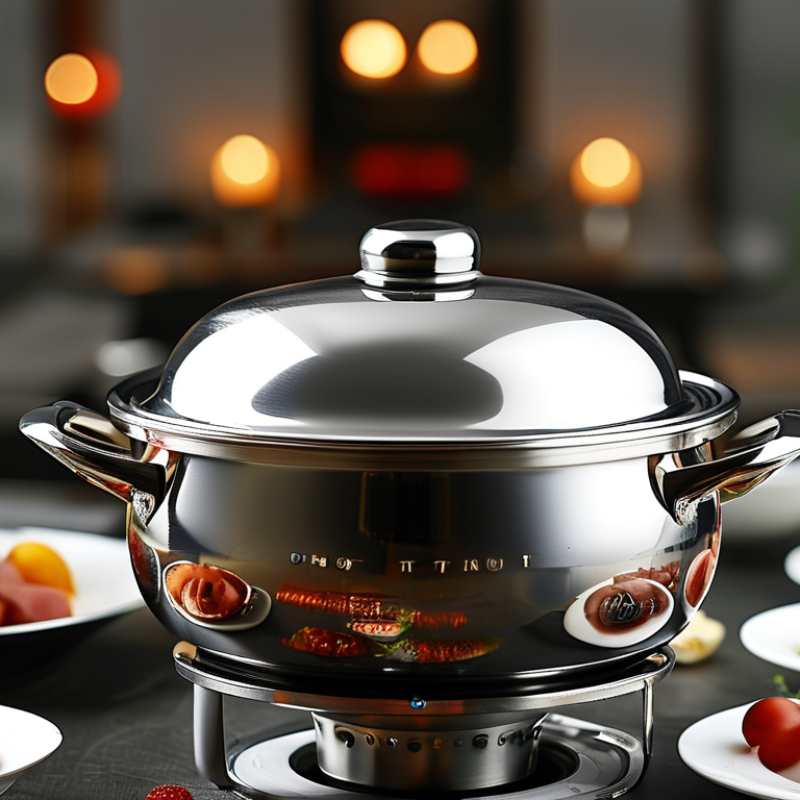
China Top 10 Stainless Steel Insulated Hotpot Manufacturers

Definition and Market Role of Stainless Steel Insulated Hotpots

Stainless steel insulated hotpots are reusable food vessels designed to preserve heat through double-wall construction, vacuum space, or thermal insulation. Their role is practical: they slow heat loss while protecting food from direct exposure. A tight lid, polished inner wall, and stable handle matter as much as the steel grade.

The category is not perfectly defined. Some reports group hotpots with cookware, while others classify them as food-storage containers. Grand View Research valued the global cookware market at about USD 19.1 billion in 2023, showing a broad commercial base for durable kitchen products. Mordor Intelligence’s food-container research also identifies reusable formats as an important response to waste reduction and convenience needs. These figures are useful, but they do not measure insulated hotpots alone.

In homes, an insulated hotpot can hold soup, rice, or stew for several hours. In catering, it supports portion control and short-distance serving without constant reheating. Stainless steel offers corrosion resistance, cleanability, and mechanical strength. Food-contact surfaces still require careful testing. Manufacturers should verify temperature retention, seal performance, weld quality, and migration safety under recognized standards. A hotpot that feels heavy is not automatically better. Excess weight can reduce daily use. Testing is often less glamorous, but it exposes weak lids and uneven insulation quickly. Temperature performance also changes with filling level, ambient conditions, and opening frequency.

Key Criteria for Selecting China’s Top Manufacturers

China’s top stainless steel insulated hotpot manufacturers should be judged beyond catalog photos. World Stainless Association data recorded about 58.4 million tonnes of global crude stainless steel production in 2023. This indicates strong supply depth, not automatic product quality. Buyers should confirm 304 or 316 stainless steel through independent material reports. Food-contact documentation should match the target market. A reliable factory also provides welding records, vacuum-retention results, and batch traceability.

Insulation performance needs practical testing. Ask for heat-retention data after six, eight, and twelve hours. Test samples with hot soup, not empty containers. Check lid sealing, handle strength, surface polishing, and cleaning access. The ASTM Committee’s consumer-product testing principles support repeatable conditions, controlled temperatures, and documented results. Manufacturers with ISO 9001 systems may offer better process control, but certification alone proves little. Factory audits still matter. A clean production line matters more than a polished brochure.

Tips: Request three samples from different batches. Measure temperature loss yourself. Compare wall thickness, gross weight, and weld consistency. Ask how rejected units are recorded. Pricing can mislead. A cheaper pot may use thinner steel or weaker vacuum insulation. That temptation is real. I have seen specifications look excellent until repeated lid testing exposed small leaks. Select suppliers that explain failures clearly, accept reasonable inspections, and provide stable lead-time records. Check export experience, packaging protection, spare-part support, and written warranty terms before signing.

Profiles of China’s Top 10 Stainless Steel Insulated Hotpot Manufacturers

Profiles of China’s Top 10 Stainless Steel Insulated Hotpot Manufacturers

China’s top ten stainless steel insulated hotpot manufacturers differ in scale, engineering focus, and export experience. Their profiles should cover factory location, production capacity, material selection, and quality controls. Many use food-contact 304 stainless steel for inner pots, while some offer 316 steel for demanding applications. Double-wall construction and vacuum insulation help retain heat during busy meals. However, insulation performance depends on welding accuracy and sealing quality, not appearance alone.

A reliable profile also reviews laser welding, leak testing, temperature retention, and surface polishing. Look for manufacturers with documented inspections and traceable production records. Factory audits can reveal storage conditions, worker training, and testing equipment. I would not treat a glossy catalog as proof. A polished surface may still hide weak seams. That point is easy to miss.

Tips: Ask for sample units before placing a large order. Measure heat retention after two, four, and six hours. Check lid fit, handle strength, rim smoothness, and cleaning access. Request food-contact material reports and packaging details. Minor defects can become costly during transport or repeated use.

The strongest manufacturer profiles also explain customization limits, mold fees, minimum order quantities, and delivery schedules. Some factories excel at household hotpots, while others serve restaurants with larger capacities. Production speed can vary during peak seasons. Buyers should compare evidence, not promises. Even experienced sourcing teams can overlook after-sales response time, which deserves a clear place in every profile.

Product Features, Manufacturing Strengths, and Certification Standards

China Top 10 Stainless Steel Insulated Hotpot Manufacturers

Stainless steel insulated hotpots combine food safety, heat retention, and daily convenience. The 2023 World Stainless statistics reported global crude stainless steel production of about 58.4 million tonnes. This scale supports stable material sourcing, but grade selection still matters. Many manufacturers use 304 stainless steel for food-contact surfaces. Some offer 316 steel for higher corrosion resistance. A vacuum layer, double-wall body, and tight lid can reduce heat loss during serving. Handles should remain comfortable after prolonged use.

Manufacturing strength depends on more than attractive polishing. Reliable factories control deep drawing, laser welding, vacuum extraction, and leak testing in sequence. They inspect wall thickness and lid alignment. A useful production line also performs thermal-retention tests at fixed temperatures and time intervals. Grand View Research valued the global cookware market at approximately US$19.9 billion in 2023. That growth increases demand, yet rapid output can weaken inspection discipline. No factory is flawless. Buyers should review batch records, sample failures, and corrective-action reports.

Certification evidence should match the destination market. Food-contact materials may require China GB 4806, European Regulation (EC) No. 1935/2004, or United States FDA requirements. LFGB testing can provide additional evidence for certain European buyers. ISO 9001 supports process consistency, while ISO 14001 addresses environmental management. Certificates alone prove little without traceable laboratory reports. Ask for migration testing, vacuum performance records, material composition reports, and factory audit access. A small detail matters: the inner surface should be smooth, cleanable, and free from sharp weld marks. Some suppliers overlook this point.

How to Compare Suppliers for Quality, Price, and Customization

When comparing China’s top 10 stainless steel insulated hotpot manufacturers, start with measurable quality, not polished catalogs. The World Stainless Association reported about 58.4 million tonnes of global crude stainless steel production in 2023. Large output does not guarantee better cookware. Ask for the steel grade, wall thickness, vacuum retention test, weld inspection, and food-contact documentation. A 304 inner pot suits most food applications, while 316 steel may offer stronger corrosion resistance. Request samples and test them with hot water for six to eight hours. Check heat retention, leakage, lid fit, handle strength, and surface odor.

Price comparisons should use landed cost, not factory price alone. Include tooling, sample fees, packaging, inspection, shipping, and replacement allowances. A low quotation may hide a high minimum order quantity or unstable material thickness. The ISO Survey 2022 recorded over 1.2 million ISO 9001 certificates worldwide, yet certification alone cannot prove consistent hotpot quality. Review recent audit records, batch inspection reports, and corrective-action evidence. Ask how many defective units appeared in the last three shipments. Some suppliers may answer vaguely. That is a warning.

Customization needs equal attention. Confirm mold ownership, logo durability, color tolerance, lid structure, insulation performance, and packaging tests. Request a written specification sheet before approving production. Compare prototype results, not promises. My own practical view is less optimistic: customization often increases delays and hidden costs. Small design changes can affect vacuum performance. Allow time for revision. One missing test can become a large return problem.

FAQS

Which stainless steel grade should I request for an insulated hotpot?

Request independent reports confirming 304 or 316 stainless steel. 304 suits most food applications. 316 may resist corrosion better. Do not trust catalog claims alone.

How can I test heat retention properly?

Fill the sample with hot soup or water. Measure temperatures after six, eight, and twelve hours. Record the starting temperature. Empty-container tests are not useful.

What construction details deserve close inspection?

Check double-wall construction, weld consistency, lid sealing, and wall thickness. Run a finger around the rim. Small leaks may appear after repeated lid testing.

How many samples should I order before a large purchase?

Request three samples from different batches. Compare their weight, surface finish, handles, lids, and welds. Differences between samples can reveal unstable production.

Does a quality certification prove reliable hotpot production?

No. Certification may suggest process control, but it proves little alone. Review inspection records, rejection logs, and corrective actions. Factory audits still matter.

How should I compare supplier prices?

Compare landed cost, not the factory quotation alone. Include tooling, samples, packaging, inspection, shipping, and replacements. A cheap pot may use thinner steel.

What customization details should be confirmed in writing?

Confirm mold ownership, minimum order quantity, lid design, color tolerance, packaging, and delivery dates. Ask whether customization affects insulation. It sometimes does.

What factory conditions should an audit examine?

Inspect the production line, storage areas, testing equipment, and worker training. Look for batch traceability and clean handling. A polished brochure cannot show these details.

Which after-sales terms should buyers request?

Request written warranty terms, spare-part support, replacement procedures, and response times. Ask about defects in recent shipments. Vague answers deserve more questions. I have overlooked this before.

Conclusion

This article presents a practical overview of the Stainless Steel Insulated Hotpot industry in China, explaining how these products support home dining, catering, hospitality, and foodservice applications. It examines the market role of insulated hotpots, including their heat-retention performance, durability, hygiene, portability, and suitability for serving soups, stews, and other hot dishes. It also outlines the main criteria for identifying leading manufacturers, such as production capacity, material quality, engineering expertise, quality-control systems, export experience, and after-sales support.

The article profiles China’s top 10 Stainless Steel Insulated Hotpot manufacturers without focusing solely on company size, highlighting their product features, manufacturing strengths, customization capabilities, and relevant certification standards. It further provides a supplier-comparison framework covering thermal performance, stainless steel grade, structural design, order flexibility, pricing, delivery reliability, packaging, and private-label options. By using these criteria, buyers can make more informed sourcing decisions and select suppliers that offer a balanced combination of quality, cost efficiency, safety, and long-term cooperation potential.

Eleanor

Eleanor

Eleanor is a seasoned marketing professional dedicated to helping customers better understand the value, quality, and practical applications of our company’s products and solutions. With a strong understanding of product development, market trends, customer needs, and industry communication, she......