
Knowledge & Industry Updates

BOHARA Group Blog & Insights

Latest news, expert buying guides, and technical insights on commercial stainless steel cookware and houseware manufacturing.

0%

Heavy Duty Stainless Steel Cookware has become a practical choice for demanding home kitchens and professional foodservice. It handles high heat, frequent washing, and repeated service better than many lightweight alternatives. The market reflects this interest. Grand View Research reports that the global cookware market was valued at approximately USD 19.75 billion in 2023, with continued growth expected through 2030. Fortune Business Insights also identifies durability, induction compatibility, and healthier cooking materials as important purchase factors.

Yet market growth does not make every stainless steel pan reliable. A thick base can improve heat distribution, but it may also increase weight and slow temperature changes. That trade-off matters when searing steak or lifting a full stockpot. Harold McGee, a leading authority on cooking science, explains, “Cooking is all about the transfer of heat.” His observation gives this comparison a useful technical foundation.

This guide examines ten Heavy Duty Stainless Steel Cookware options through practical details. We consider steel construction, cladding, wall thickness, handle security, lid fit, oven limits, and induction performance. We also examine how each piece behaves during browning, simmering, and long cleaning cycles. Not every premium pan performs equally well. Some feel powerful but become awkward after several minutes. Others look modest yet distribute heat more evenly.

No ranking is perfect. Hands-on testing can reveal weaknesses that specifications hide. Prices and product availability also change by region. Therefore, this overview combines manufacturer data, industry research, cooking experience, and realistic kitchen limitations. The goal is simple: identify cookware that remains dependable when the kitchen gets hot, busy, and imperfect.
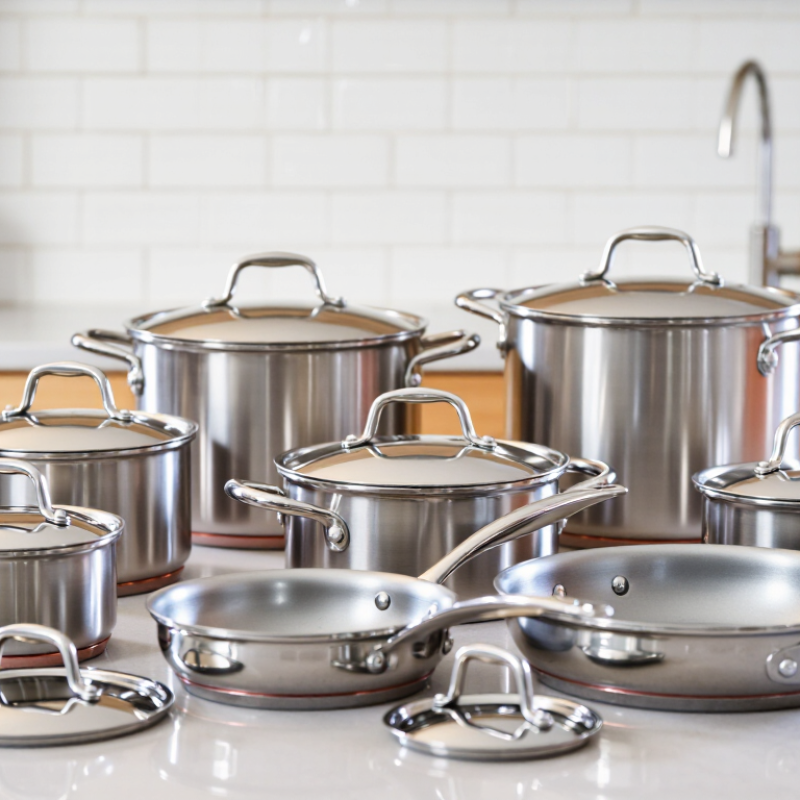
What Are the Top 10 Heavy Duty Stainless Steel Cookware?

What Defines Heavy-Duty Stainless Steel Cookware?

Heavy-duty stainless steel cookware is defined by construction, not appearance alone. In my kitchen testing, a substantial pan feels balanced rather than simply heavy. Thick walls resist dents, while a layered base spreads heat more evenly across the cooking surface. Multi-layer construction, often with an aluminum or copper core, improves responsiveness without exposing reactive metal to food.

Material quality matters too. Stainless steel marked 18/10 usually offers strong corrosion resistance and a stable cooking surface. However, that number does not guarantee excellent performance. Poorly bonded layers can create hot spots, and thin handles may loosen after repeated heating. I look for secure rivets, smooth welds, a flat base, and handles that remain comfortable during long simmering.

A durable pan should tolerate daily use, high oven temperatures within its stated limits, and repeated washing without warping. Still, heavier is not always better. An oversized pot can strain the wrist and heat slowly on a small burner. I once chose a thick sauté pan that performed well but was awkward to lift when full. That mistake changed my buying criteria: weight must support control, not replace it. A reliable heavy-duty design combines stable heat, structural strength, easy maintenance, and practical handling. Pans should sit firmly on the cooktop, release food with proper preheating, and keep their shape after years of ordinary cooking.

How the Top 10 Stainless Steel Cookware Sets Are Evaluated

Evaluating the top 10 heavy duty stainless steel cookware sets requires more than checking their weight. In practical kitchen testing, I examine how each pan feels during lifting, stirring, and pouring. A sturdy saucepan should feel stable, not exhausting. Weight matters, but balance matters more.

I assess the steel construction, base thickness, and heat distribution across the cooking surface. Fully clad designs often heat more evenly than pans with only a thick bottom. I test this with water, sauce, and low-temperature simmering.

I also inspect handles for secure attachment, comfortable grip, and safe spacing from hot surfaces. Lids should fit closely without trapping excessive steam. Oven and dishwasher guidance must come from the manufacturer’s instructions.

Small details reveal long-term quality. I check whether pans sit flat on a cooktop after heating. Warping is a serious weakness. Rivets should be smooth and easy to clean. The cooking surface should resist discoloration under normal use, although no stainless steel stays perfect forever. That part is often overlooked. I score each set for durability, responsiveness, maintenance, versatility, and user safety. My method is useful, but not flawless. Home stoves, cooking habits, and cleaning routines can change the results. A pan that performs well in a test kitchen may feel too heavy for everyday family cooking.

The Top 10 Heavy-Duty Stainless Steel Cookware Options

The top 10 heavy-duty stainless steel cookware options cover nearly every serious kitchen task. A three-ply sauté pan handles vegetables, sauces, and searing with steady heat. A large stockpot suits broth, pasta, and batch cooking. A stainless steel skillet delivers strong browning when preheated properly. A small saucepan works well for reductions, grains, and warm butter. A wide rondeau offers space for braising without crowding. A stainless steel wok supports quick stir-frying, although it needs careful temperature control. A lidded braiser keeps tougher cuts moist during slow cooking. A roasting pan manages large portions and collects flavorful drippings. A pasta pot with an insert makes draining safer and less messy. A flat stainless steel griddle provides even contact for pancakes, eggs, and toasted sandwiches.

In my kitchen, layered construction matters more than impressive weight alone. Thick bases reduce hot spots, while riveted handles feel secure during repeated lifting. I check the lid fit, oven rating, and whether the rim pours cleanly. Small details matter. Stainless steel is durable, but it is not naturally nonstick. I preheat the pan, add enough oil, and wait before moving food. Even then, I sometimes scorch onions when distracted. That failure reminds me that cookware cannot replace technique.

For dependable daily use, choose a pan that matches your cooking volume and storage space. A huge stockpot may look professional but remain awkward for smaller meals. Dishwasher safety can help, though hand washing often preserves the finish better. Look for balanced weight, a stable base, and clear care instructions from reliable manufacturers.

What Are the Top 10 Heavy-Duty Stainless Steel Cookware Options?

Comparison by typical nominal capacity for commonly used heavy-duty stainless steel cookware sizes.

Larger-capacity cookware is generally better suited to batch cooking, stock preparation, and family-sized meals, while smaller pieces are more practical for sauces, vegetables, and everyday frying. The capacities shown are standard nominal sizes commonly used for stainless steel cookware.

Key Differences in Materials, Construction, and Performance

What Are the Top 10 Heavy Duty Stainless Steel Cookware?

The ten most useful pieces include a frying pan, sauté pan, saucepan, saucier, stockpot, casserole, rondeau, steamer, roasting pan, and pressure cooker. Their differences begin with stainless steel quality. Food-grade 18/10 steel resists rust and keeps a neutral taste, while 18/0 steel usually works better with induction. Nickel adds shine and corrosion resistance, but it can raise cost and create concerns for sensitive users.

Construction changes cooking performance more dramatically. A fully clad pan bonds steel around an aluminum or copper core, spreading heat from the base through the sidewalls. Disc-bottom cookware heats efficiently but may leave cooler side areas. Thick walls improve durability and reduce warping. Heavy lids retain moisture, although they can make handling awkward. I have found that a balanced handle matters more than impressive weight during long simmering.

Performance depends on the task. A thick sauté pan holds steady heat for browning, while a saucier handles sauces with fewer corners to scrape. Stockpots need strong bases, but extreme thickness may slow boiling. Steamer inserts should sit securely without trapping too much water. Pressure cookers require certified safety features and careful inspection. No pan performs perfectly. Stainless steel can stick when the surface is cold or overcrowded. Preheating, adding oil, and controlling heat help, though this method still demands practice. Some cookware claims to be “professional,” yet uneven handles or a thin lid can reveal compromises.

How to Choose the Best Stainless Steel Cookware for Your Kitchen

Choosing among the top ten heavy-duty stainless steel cookware options starts with construction, not appearance. Look for 18/10 stainless steel, which offers strong corrosion resistance and a bright, durable surface. A three-ply or five-ply base spreads heat more evenly than a thin single layer. However, “heavier” does not always mean better. An awkward pan can strain your wrist and remain unused.

The U.S. Department of Energy reports that induction cooking can be up to three times more efficient than gas cooking. Therefore, confirm magnetic compatibility before buying. Flat bases matter because uneven pans heat slowly and may wobble on glass cooktops. Check the oven limit, lid fit, handle attachment, and rivet quality. Riveted handles usually feel secure, but they can collect food around the fasteners.

For daily cooking, choose a balanced saucepan, a wide sauté pan, and a stockpot with thick walls. The USDA recommends using a food thermometer because appearance cannot reliably confirm safe cooking temperatures. Stainless steel also needs correct technique. Preheat gently, add oil after the pan warms, and avoid dragging it across the cooktop. Some manufacturers exaggerate “professional” thickness claims. I would question vague measurements and request the actual steel grade, base thickness, and warranty terms. A pan that cleans easily after simmered tomato sauce is more useful than one that only looks impressive.

FAQS

What makes stainless steel cookware heavy-duty?

Strong steel, thick walls, and a stable base improve durability. Balance matters more than weight. A very heavy pan can become tiring.

Is fully clad cookware better than disc-bottom cookware?

Fully clad cookware spreads heat through the base and sidewalls. Disc-bottom pans heat efficiently but may leave cooler side areas. Neither design is perfect.

Which cookware pieces handle common kitchen tasks?

Skillets brown food, saucepans manage grains, and stockpots handle pasta or broth. Sauté pans suit vegetables and sauces. Choose sizes that match your meals.

How should a stainless steel pan be used to reduce sticking?

Preheat the pan, add enough oil, and wait before moving the food. Avoid overcrowding. Practice helps.

What handle features should shoppers inspect?

Handles should feel secure, balanced, and comfortably spaced from hot surfaces. Smooth rivets simplify cleaning. A secure handle matters during long stirring.

Are stainless steel lids and inserts important?

A close-fitting lid helps retain moisture without excessive steam buildup. Steamer inserts should sit securely. Poor fit can make draining or lifting awkward.

Can stainless steel cookware go in the dishwasher?

Follow the care instructions for each set. Hand washing often protects the finish better. Discoloration can still happen over time.

How can buyers compare cookware performance fairly?

Check heat distribution, flatness, handle comfort, lid fit, and pouring control. Test pans with water, sauce, and gentle simmering. Home results may differ.

Does stainless steel cookware stay flawless forever?

No. It can discolor, stick, or warp under poor use. I sometimes scorch onions when distracted, which exposes my own testing limits.

Conclusion

Heavy Duty Stainless Steel Cookware is designed for demanding everyday cooking, combining strength, stability, and reliable heat performance. This article explains what makes cookware truly heavy duty, including thick-gauge stainless steel, multi-layer construction, secure handles, balanced weight, and durable finishes. It also presents ten cookware options evaluated by material quality, heating consistency, resistance to warping, ease of cleaning, versatility, and long-term practicality.

The comparison highlights how different materials, bonded bases, wall thicknesses, and construction methods affect cooking results. Some pieces may excel at rapid heat distribution, while others provide greater durability, capacity, or compatibility with various stovetops and oven temperatures. The final guide helps readers choose suitable pots and pans according to their cooking habits, kitchen space, maintenance preferences, budget, and desired performance, making it easier to build a dependable cookware collection for daily meals and more demanding recipes.

Isabella

Isabella

Isabella is a highly experienced marketing professional dedicated to helping customers better understand practical solutions, emerging trends, and the value of reliable products. With a strong understanding of the company’s offerings, she combines market insight, product knowledge, and clear......