
Knowledge & Industry Updates
Latest news, expert buying guides, and technical insights on commercial stainless steel cookware and houseware manufacturing.
Finding reliable stainless steel houseware manufacturers in 2026 requires more than comparing online catalogs. The market is broad, fragmented, and highly sensitive to material quality. The International Stainless Steel Forum reported approximately 58.4 million tonnes of global stainless steel production in 2023. This scale creates opportunity, but it also makes supplier screening more difficult. Numbers matter. Reputation matters more.
For buyers, Stainless Steel Houseware Manufacturing should be evaluated through documented processes, not attractive product photos. Review whether the factory uses certified 304 or 316 stainless steel for the intended application. Check material certificates, thickness records, welding procedures, polishing standards, and passivation controls. Request samples from the actual production line. A polished sample may hide weak welds, uneven edges, or inconsistent wall thickness. In practical sourcing, these details often separate a dependable partner from a trading company.
The ISO Survey of Management System Standards can help verify whether a supplier maintains ISO 9001 quality procedures. However, certification alone does not prove manufacturing capability. Audit production capacity, inspection equipment, worker training, packaging tests, and corrective-action records. Confirm food-contact documentation for cookware, storage containers, and serving items. Also review export experience, lead-time performance, and traceability by batch. One weakness remains. Remote audits can miss daily production problems. A factory visit, independent inspection, and small pilot order provide stronger evidence. This guide explains how to compare manufacturers, validate claims, and choose a partner with practical, measurable reliability.
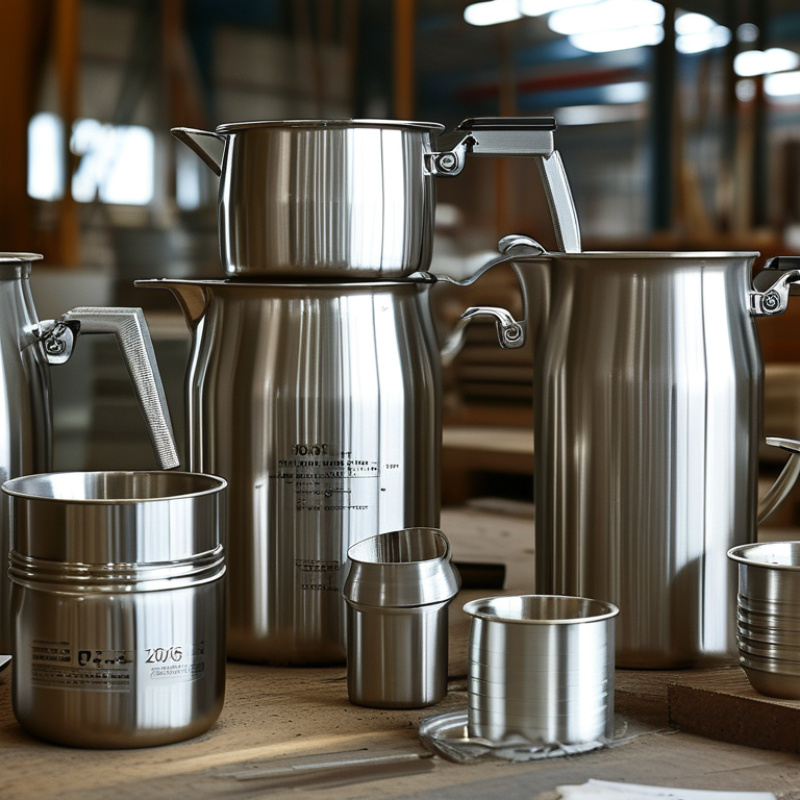
Before contacting manufacturers in 2026, write a precise product brief. Describe each item’s use, dimensions, weight, capacity, and required steel grade. Specify the finish, such as mirror polish, brushed texture, or a heat-resistant coating. Mention handle construction, edge smoothness, welding quality, and acceptable surface marks. Small details matter.
Your brief should also include target quantity, estimated annual demand, packaging needs, delivery destination, and expected production schedule. Add drawings with tolerances where possible. A sample photo helps, but it cannot replace technical measurements. In my sourcing experience, unclear drawings often create costly revisions. I still sometimes underestimate packaging space. That mistake is worth reviewing.
Tips: Request a pre-production sample and a written quality standard. Ask how the factory checks steel thickness, weld strength, polishing consistency, and packaging damage. Confirm whether inspection records and material traceability are available. Discuss minimum order quantities, sample charges, payment stages, and lead times before negotiation. A reliable manufacturer should explain limitations clearly, not promise everything immediately. Check production capacity through recent records, facility videos, or an independent factory audit. Use measurable acceptance criteria instead of vague terms like “premium quality.” This makes supplier comparisons fairer and supports dependable purchasing decisions.
How to Find Stainless Steel Houseware Manufacturers 2026?
Reliable sourcing begins with identifying the right manufacturer type. Integrated factories control stamping, polishing, welding, and packaging under one roof. They usually provide better process traceability and more consistent finishes. OEM manufacturers produce to your drawings, while ODM suppliers offer tested designs that reduce development time. Specialized workshops may excel at vacuum flasks, cookware, or kitchen tools, but their capacity can be limited. Trading companies can simplify communication, yet their factory access and quality control require closer verification.
Production regions reveal useful differences. Guangdong and Zhejiang are strong choices for diversified houseware ranges, flexible tooling, and export experience. Jiangsu often has capable metal-processing suppliers with stable industrial infrastructure. India offers skilled stainless-steel production, especially for traditional kitchenware and customized finishes. Vietnam has growing assembly and fabrication capacity, although supplier depth varies by product. Turkey can be practical for nearby European delivery and smaller production runs. These are broad patterns, not guarantees.
Request factory videos, material certificates, dimensional drawings, and a live production audit. Check whether the supplier uses food-contact grades suitable for your target market. Inspect weld seams, handle joints, rim smoothness, and polishing marks on physical samples. A sample may look excellent while mass production changes subtly. That risk is real. I would also compare three suppliers using the same specification sheet, including thickness, tolerance, packing method, and inspection criteria. Do not trust impressive machinery alone. Ask who performs final inspection, how rejected pieces are recorded, and whether production records remain traceable.
| Manufacturer Type | Best-Suited Products | Typical Production Capabilities | Common Stainless Steel Grades | Key Advantages | Main Risks to Check | Documents and Evidence to Request |
|---|---|---|---|---|---|---|
| Integrated stainless steel houseware factory | Cookware, kitchen tools, sinks, storage containers, serving products, and mixed product ranges | Sheet cutting, deep drawing, stamping, spinning, welding, polishing, assembly, inspection, and packaging in one facility | AISI 304 / EN 1.4301AISI 316 / EN 1.4401AISI 430 / EN 1.4016 | Better control of lead times, traceability, tooling, quality consistency, and customization | Some factories may subcontract polishing, plating, handles, or packaging without disclosing it | Factory address, process-flow chart, material certificates, production photos or live audit, quality-control plan, and subcontractor list |
| Metal stamping and deep-drawing specialist | Bowls, trays, pots, canisters, lids, cutlery components, and formed kitchen accessories | Progressive stamping, deep drawing, trimming, flanging, punching, and dimensional inspection | 304430201 | Efficient for repeat orders, consistent shapes, and high-volume production | Wrinkling, thinning, cracks, uneven wall thickness, and tooling charges can affect the final cost | Material thickness range, tooling ownership terms, sample measurements, production-capacity evidence, and first-article inspection report |
| Cookware and pressure-forming manufacturer | Pots, pans, stockpots, steamers, pressure-cooking components, and induction-compatible cookware | Deep drawing or impact forming, base bonding, handle assembly, polishing, leak testing, and heat-distribution testing | 304430Aluminium-core constructions | Experience with functional performance, thermal behavior, and cookware safety requirements | Uneven bases, poor bonding, handle looseness, sharp edges, warping, and inaccurate induction claims | Base-construction specification, flatness test, bonding test, handle-load test, heat-distribution data, and applicable food-contact test reports |
| Kitchen utensil and wire-forming factory | Whisks, racks, baskets, strainers, hooks, tongs, ladles, and wire accessories | Wire drawing, bending, welding, spot welding, laser welding, deburring, polishing, and assembly | 304316430 | Suitable for lightweight products, complex wire shapes, and medium-to-large repeat orders | Weld discoloration, exposed sharp points, weak joints, inconsistent wire diameter, and incomplete polishing | Weld-strength test, edge-safety inspection, wire-diameter records, surface-finish samples, and corrosion-resistance requirements |
| Precision machining and finishing supplier | Premium handles, fittings, dispensers, valves, coffee accessories, and small stainless steel components | CNC turning, milling, drilling, threading, laser marking, brushing, mirror polishing, and passivation | 304316L303 where appropriate | High dimensional accuracy, refined appearance, and capability for complex components | Higher unit cost, longer tooling or programming time, mixed surface finishes, and burrs in internal areas | Technical drawings, tolerance capability, surface-roughness specification, passivation records, and dimensional inspection report |
| OEM/ODM product-development factory | Private-label houseware collections, custom shapes, gift sets, and packaging-specific products | Industrial design support, prototyping, tooling, sample revision, mass production, packaging, and export coordination | Grade selected according to product function, cost, corrosion exposure, and food-contact requirements | Useful when the buyer needs new designs, custom packaging, or coordinated product launches | Unclear ownership of molds and drawings, unauthorized material substitutions, and quality differences between samples and mass production | Signed specifications, approved golden sample, change-control procedure, tooling agreement, bill of materials, and pre-shipment inspection plan |
| Trading company or sourcing intermediary | Small mixed orders, multiple product categories, and buyers needing supplier coordination | Supplier matching, quotation management, consolidation, translation, inspection coordination, and export documentation | Depends on the actual producing factory and must be confirmed independently | Can simplify communication and combine products from several factories | Limited control over production, hidden markups, unclear factory identity, and weak traceability | Legal business registration, written disclosure of the producing factory, authorization to represent it, inspection access, and complete commercial documentation |
| Production Region | Common Manufacturing Strengths | Typical Product Positioning | What Buyers Should Verify | Best Fit for |
|---|---|---|---|---|
| East and South China | Large stainless steel processing base, broad supplier networks, tooling, stamping, polishing, cookware, utensils, and packaging support | From entry-level high-volume products to customized mid-market collections | Actual factory ownership, material grade, thickness, subcontracted processes, environmental compliance, and production capacity | Buyers seeking a wide product range, OEM/ODM development, and consolidated sourcing |
| India | Strong metalworking, cookware, utensils, servingware, stainless steel fabrication, and export-oriented production clusters | Value-oriented and mid-market houseware, including traditional and commercial kitchen products | Surface-finish consistency, dimensional control, packaging quality, export experience, and food-contact documentation | Large-volume cookware, utensils, serving products, and cost-sensitive sourcing |
| Japan and South Korea | Precision forming, high-quality finishing, engineered cookware, functional design, and advanced quality systems | Premium and technically differentiated products | Minimum order quantity, customization limits, testing scope, export terms, and total landed cost | Premium collections, performance-focused products, and buyers prioritizing finish and consistency |
| Italy and Germany | Design-led houseware, precision engineering, premium cookware, specialized forming, and strong process documentation | Premium, design-oriented, and technically specified products | Production location, lead time, batch size, component sourcing, compliance declarations, and after-sales support | High-end retail, professional kitchen products, and design-sensitive collections |
| Türkiye | Cookware, kitchen utensils, servingware, metal forming, polishing, and convenient access to European markets | Mid-market to premium houseware | Grade certificates, weld and handle quality, coating or polishing durability, and logistics arrangements | European buyers seeking regional supply and flexible product development |
| Vietnam and Southeast Asia | Growing metal-processing and houseware capacity, export manufacturing, assembly, and regional supply-chain diversification | Value and mid-market products, depending on factory maturity | Production history, equipment ownership, capacity during peak season, material traceability, and subcontractor controls | Buyers diversifying supply chains or sourcing selected product categories from Southeast Asia |
| Central and Eastern Europe | Shorter regional delivery routes, metal fabrication, contract manufacturing, and proximity to European customers | Mid-market, professional, and customized products | Actual manufacturing scope, labor and energy costs, certification validity, and minimum order quantities | European replenishment, shorter lead times, and smaller regional production programs |
| Evaluation Dimension | Reliable Evidence | Practical Acceptance Criteria |
|---|---|---|
| Material identity and traceability | Mill test certificate, heat or batch number, purchase records, and material-label photos | The stated grade, thickness, finish, and batch information should match the approved specification and production records |
| Food-contact suitability | Applicable laboratory test reports and a written declaration of compliance for the destination market | Testing should correspond to the actual product, material, surface treatment, and intended food-contact use |
| Surface and corrosion performance | Salt-spray or corrosion test where relevant, polishing standards, passivation records, and retained samples | No unacceptable rust, pitting, sharp edges, discoloration, or surface defects under the agreed inspection method |
| Production capacity | Equipment list, monthly capacity by product type, staffing information, production schedule, and recent shipment records | Capacity should cover the required order quantity without relying on undisclosed subcontracting |
| Quality-management system | Quality manual, inspection checkpoints, calibration records, corrective-action reports, and relevant ISO 9001 certification if available | Controls should cover incoming material, forming, welding, polishing, assembly, packaging, and final inspection |
| Sample-to-production consistency | Signed golden sample, approved technical specification, pre-production sample, and batch inspection report | Mass-produced goods should match the approved sample in dimensions, finish, function, packaging, and labeling |
| Commercial reliability | Written quotation, Incoterms, payment schedule, lead-time commitment, warranty terms, and change-control process | All cost items, responsibilities, tolerances, and remedies for defects should be documented before order placement |
| Factory verification | Video audit, independent factory audit, on-site inspection, production-line evidence, and verification of the legal entity | The verified legal entity, factory location, production equipment, and bank-account information should be consistent |
How to Find Stainless Steel Houseware Manufacturers 2026?
Finding a stainless steel houseware manufacturer in 2026 requires more than checking a polished catalog. The ISSF Stainless Steel in Figures 2024 reported roughly 59 million tonnes of global stainless crude steel production in 2023. Large supply does not guarantee suitable kitchenware. Request a factory visit, production flow, equipment list, and recent product samples. Watch laser welding, deep drawing, polishing, and final inspection on the shop floor.
Verify ISO 9001 certificates through the issuing body, not only a scanned copy. The ISO Survey 2023 recorded 1,265,216 ISO 9001 certificates worldwide. Certification supports quality control, but it does not prove every batch. Check the certificate scope, address, expiry date, and covered processes. Ask for mill test certificates showing grade, chemical composition, thickness, and heat number. For food-contact items, request relevant test reports and declarations against applicable standards.
Material claims need physical checks. A portable X-ray fluorescence test can distinguish common grades, such as 304 and 316, within seconds. Compare the result with the mill certificate and purchase order. Confirm surface finish, weld integrity, dimensional tolerance, and corrosion testing requirements in writing. A sample may look excellent while production varies later. I would treat missing traceability as a warning. Factory audits can also miss problems, especially when inspection happens on a quiet day. Recheck critical batches before shipment.
Verify factory capabilities, certifications, traceability, and material standards before placing an order.
The chart compares the lower-bound chromium and nickel requirements for common stainless steel grades used in housewares, based on ASTM A240/A240M composition tables. The 430 grade is shown with 0% nickel because the specification does not set a minimum nickel requirement; this does not mean every 430 sample contains zero nickel. Request a valid certification within the manufacturer’s scope, heat or lot traceability, and a material test certificate for each production batch.
Reference: ASTM A240/A240M stainless steel plate, sheet, and strip specifications. Material chemistry should be confirmed against the applicable product standard and test report.
Finding a reliable stainless steel houseware manufacturer requires more than comparing online quotations. Request physical samples with identical specifications, including steel grade, wall thickness, weld quality, surface finish, and handle strength. Examine the edges under bright light. Small scratches often reveal weak polishing control.
Ask for a complete price breakdown. Confirm whether the quotation includes tooling, packaging, inspection, and delivery to your destination. A low factory price may hide expensive cartons or export charges. My first comparison once favored the cheapest offer, but the sample required costly corrections. That mistake changed my evaluation process.
Minimum order quantities can vary by product size and production method. Ask whether a mixed-model order is possible, especially when testing a new market. Confirm the sample fee and whether it is refundable after mass production. Lead times should cover sample approval, raw material purchasing, production, inspection, and packing. Request a written schedule with realistic buffer days. Very short promises deserve careful questions.
Check recent production records, quality procedures, and material documentation. An experienced supplier should explain its inspection points clearly, not only send attractive photos. Keep approved samples and signed specifications for later comparison. Some details still remain uncertain, such as seasonal capacity or sudden material delays. Build those risks into your purchasing plan.
How to Find Stainless Steel Houseware Manufacturers in 2026?
A reliable contract should define steel grade, thickness, tolerances, surface finish, packaging, and inspection rights. Avoid vague terms such as “premium stainless steel.” Specify 304 or 316 grade only when the application requires it. The ISSF’s Stainless Steel in Figures 2024 reported 58.4 million tonnes of global stainless steel production in 2023. That scale does not guarantee stable quality. Ask for heat numbers, mill certificates, and traceability from coil to finished utensil.
Quality control must be visible on the factory floor. Review incoming material checks, welding inspections, polishing standards, and food-contact documentation. ISO’s 2022 Survey recorded about 1.27 million ISO 9001 certificates worldwide, yet certification alone cannot prove production discipline. Request recent inspection records and run an independent pre-shipment inspection. Check dents under angled light. Test handles with repeated pressure. Small failures matter.
Long-term supply support needs measurable promises. Include agreed lead times, approved material substitutions, corrective-action deadlines, spare-tool arrangements, and quarterly capacity reviews. Ask how the manufacturer handles nickel or energy-price fluctuations. A supplier holding limited safety stock may protect urgent orders, but it can also increase your carrying cost. This trade-off deserves numbers. One imperfect sourcing habit is trusting the first successful sample too much. Recheck quality after seasonal volume rises, operator changes, or tooling repairs. Supplier support is proven during disruption, not during the first shipment.
Describe the item’s use, dimensions, weight, capacity, and required steel grade. Specify the finish, edge smoothness, handle construction, weld quality, and acceptable surface marks. Add drawings with tolerances whenever possible. A photo is not enough.
OEM manufacturers produce items from your drawings and specifications. ODM suppliers offer tested designs that can shorten development time. Integrated factories may control stamping, welding, polishing, and packaging internally. Specialized workshops can perform well, but their capacity may be limited.
Guangdong and Zhejiang often support varied product ranges and flexible tooling. Jiangsu has capable metal-processing suppliers and stable industrial infrastructure. India is known for customized stainless steel kitchenware production. Vietnam and Turkey may suit selected products or regional delivery. These are patterns, not promises.
Request recent production records, facility videos, material certificates, and dimensional drawings. A live production audit can reveal real equipment and inspection practices. Ask who performs final inspection and how rejected pieces are recorded. Impressive machinery alone proves little.
Check steel grade, wall thickness, weld seams, handle joints, and rim smoothness. Examine polished surfaces under bright light for scratches or uneven marks. Test whether handles feel secure and comfortable. Small defects matter.
Use one specification sheet for every supplier. Confirm steel grade, thickness, tolerances, finish, packaging, inspection, and delivery terms. Ask whether tooling, cartons, inspection, and transport charges are included. The cheapest quotation may not be the cheapest project.
Ask whether mixed-model orders are possible during market testing. Confirm the sample charge and whether it becomes refundable after mass production. Minimum quantities often depend on product size, tooling, and production method. Terms should be written clearly.
The schedule should include sample approval, material purchasing, production, inspection, and packing. Request written dates with realistic buffer days. Very short promises need careful questions. Delays still happen.
Approve a physical sample and sign measurable quality standards before production. Define acceptable scratches, weld strength, thickness tolerance, polishing consistency, and packaging damage. Request inspection records and material traceability when available. I once underestimated packaging space. That mistake deserves review.
Finding the right stainless steel houseware manufacturer begins with clearly defining your product requirements, including item types, dimensions, finishes, target applications, packaging, and expected order volumes. Next, identify suitable manufacturer types and production regions based on your budget, customization needs, and preferred supply model. During the screening process, verify each factory’s equipment, production experience, quality systems, certifications, and compliance with relevant stainless steel material standards. This helps ensure that the manufacturer can consistently meet both design and safety expectations.
A careful comparison of samples, pricing, minimum order quantities, tooling costs, and lead times can reveal the most practical supplier options. Before placing an order, review contracts, payment terms, inspection procedures, warranty responsibilities, and delivery conditions in detail. Strong quality control should cover raw materials, production processes, surface finishing, assembly, and final packaging. Finally, evaluate the supplier’s communication, capacity planning, and after-sales support to determine whether it can provide stable long-term cooperation. A structured Stainless Steel Houseware Manufacturing evaluation reduces sourcing risks and supports reliable product quality and supply continuity.