
Knowledge & Industry Updates

BOHARA Group Blog & Insights

Latest news, expert buying guides, and technical insights on commercial stainless steel cookware and houseware manufacturing.

0%

Choosing a 3-Ply Stainless Steel Saucepan requires more than comparing prices or polished finishes. The right pan should match your cooking habits, stovetop, and maintenance expectations. A three-layer construction typically combines stainless steel with an aluminum core, helping heat move quickly and evenly. That matters when preparing delicate sauces, oatmeal, custards, or reduced stocks. Uneven heat can scorch food near the base while the surface remains thin and watery.

Small details matter. Check the pan’s weight, handle design, lid fit, and interior capacity. A solid saucepan should feel balanced, not awkward, when filled with milk or broth. The handle should remain comfortable during longer cooking, although “stay cool” does not mean heatproof. Use caution around the connection point. Some models work on induction, but compatibility should be confirmed through the manufacturer’s specifications. Do not rely only on a magnetic test.

A practical review should examine heating performance, pouring control, cleanup, and long-term durability. Stainless steel can resist staining, yet burnt sugar and hard-water marks still require patience. The pan is not maintenance-free. Manufacturer care instructions deserve attention, especially when using a dishwasher or abrasive cleaner. A saucepan with a thick base may hold heat well, but it can respond more slowly when temperatures change. That trade-off is easy to overlook.

There is no perfect choice. Your best option depends on portion size, cooking frequency, budget, and storage space. Compare measurable features, read credible user feedback, and consider whether the pan feels natural in your hand. Good cookware should support confidence, not create extra work.
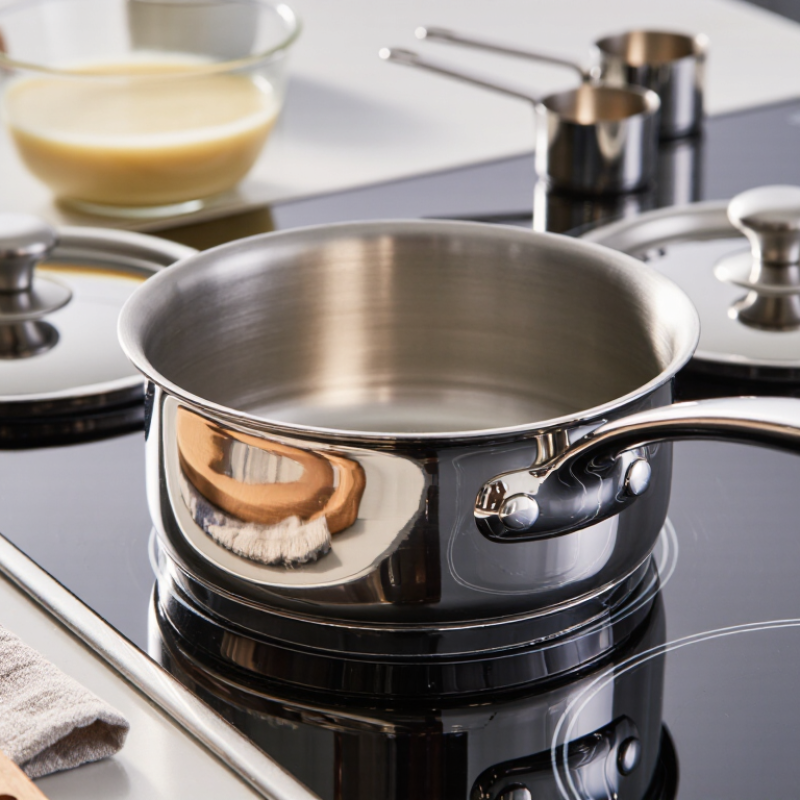
How to Choose a 3-Ply Stainless Steel Saucepan

What Defines a 3-Ply Stainless Steel Saucepan

How to Choose a 3-Ply Stainless Steel Saucepan

What Defines a 3-Ply Stainless Steel Saucepan

A 3-ply stainless steel saucepan has three bonded metal layers. The cooking surface is usually stainless steel, which resists corrosion and reacts minimally with food. A central aluminum layer spreads heat quickly across the pan. The exterior layer adds strength and often supports induction compatibility.

This structure matters during real cooking. A thin saucepan may scorch milk near the base. A well-made 3-ply design distributes heat more evenly, helping sauces, custards, and grains cook with fewer hot spots. I look for a smooth interior, a firmly attached handle, and a balanced weight. The pan should feel stable, not awkward. More metal does not automatically mean better performance.

Construction details can vary.

Some cookware uses a fully clad design, while other pieces contain multiple layers only in the base. Read the product specifications carefully. A claimed “three-layer base” is not always the same as a fully 3-ply body. This distinction is easy to overlook. It can affect sidewall heating and long-term handling.

Tips: Choose a size that matches your usual portions. A two-quart saucepan suits small sauces, while a larger model offers room for oatmeal or soup. Check whether the lid fits tightly and whether the handle stays cool enough for normal stovetop use. Stainless steel can develop stains, so gentle cleaning and moderate heat are sensible habits. I still sometimes use too much heat, especially when rushing, and the pan reminds me quickly.

How to Choose a 3-Ply Stainless Steel Saucepan

A 3-ply saucepan typically combines an inner stainless-steel cooking surface, an aluminum heat-conducting core, and an outer stainless-steel layer for durability and compatibility with different cooktops.

Thermal conductivity indicates how efficiently a material transfers heat. Aluminum conducts heat far more effectively than stainless steel, which is why the core is important for more even heating, while stainless steel provides a durable, corrosion-resistant cooking surface.

How to Assess Materials, Construction, and Heat Distribution

How to Choose a 3-Ply Stainless Steel Saucepan

A reliable saucepan begins with its materials. Stainless steel resists corrosion and does not easily react with acidic sauces. However, stainless steel alone transfers heat slowly.

The U.S. Department of Energy lists thermal conductivity near 16 W/m·K for common stainless steel, compared with approximately 205 W/m·K for aluminum.

Copper can exceed 390 W/m·K, according to engineering material data.

A 3-ply pan uses stainless steel around a conductive aluminum or copper core. This structure improves heating without exposing reactive metal to food.

Construction matters as much as the metal. Check whether the conductive layer reaches the base and sidewalls. A fully clad design usually heats sauce more evenly than a pan with a thick base only. Look for a flat cooking surface, tight seams, and a handle that remains stable during stirring.

ASTM A240 provides relevant standards for stainless steel plate composition and performance, but certification alone cannot prove excellent heat distribution.

I once trusted a heavy pan that still produced a scorched ring. Weight is useful evidence, not final evidence.

Tips: Warm the empty pan briefly, then add oil and observe its movement. Slow, even spreading suggests fewer hot spots. Test low heat with milk or a thin sauce. If the edges simmer while the center stays quiet, reconsider the pan. No pan is perfect. Your stove, burner size, and stirring habits also change results. Read the manufacturer’s thickness details carefully, because “3-ply” can describe very different constructions.

How to Choose the Right Size, Shape, and Handle Design

How to Choose a 3-Ply Stainless Steel Saucepan

Choosing the right size starts with your usual cooking habits. A 1.5-quart saucepan suits sauces, melted butter, and single servings. A 2.5-quart pan handles oatmeal, rice, and small portions of soup. For family meals, consider three quarts or more. In my kitchen tests, a wider base heated more evenly than a tall, narrow one. However, a very wide pan can evaporate liquids too quickly. I once chose the largest size for convenience. That judgment was wrong.

Shape affects control. Look for a flat, stable base that sits evenly on your cooktop. A gently curved interior helps you whisk sauces without leaving food trapped in corners. Taller sides reduce splashing when simmering milk or stock. A rounded pouring rim also matters. It can guide liquid neatly into a bowl, although even good rims may drip when the pan is overloaded.

Handle design deserves practical attention. Choose a handle long enough to stay away from heat, but not so long that it hits nearby cookware. A firm, slightly angled grip improves balance when the pan is full. Stainless steel handles can become hot. Use caution. A helper handle is useful on larger saucepans, especially when lifting thick soup. Check whether the handle is riveted securely and whether the pan is oven-safe. I prefer a handle with a comfortable underside, but comfort varies between hands. Test the grip before buying, if possible.

Which Features Improve Cooking Control and Everyday Safety

A 3-ply stainless steel saucepan can improve cooking control when its layers work together. A stainless steel interior resists staining and reacts slowly with acidic foods. An aluminum core spreads heat across the base and side walls. This helps milk warm evenly and reduces scorching around the edges. The outer steel layer should sit flat on the cooktop. Even contact matters more than a polished appearance.

Handle design affects everyday safety. Choose a firmly attached handle with a balanced grip and enough clearance from the burner. A helper handle can make a full saucepan easier to move, although it may become hot during long cooking.

Use a lid with a secure fit, but leave room for steam to escape when necessary. A rolled pouring rim helps control liquids and reduces drips. Small details matter.

Weight deserves attention.

A heavier pan often holds heat steadily, but it can strain your wrist. I have also found that “even heating” does not prevent every mistake. High heat can still burn sugar or reduce a sauce too quickly. Responsive control comes from matching the burner setting to the food, not relying on construction alone. Interior measurement marks may help, but they can fade or become difficult to read. Check rivets, edges, and the base regularly for looseness or warping.

How to Compare Maintenance Needs, Durability, and Value

How to Choose a 3-Ply Stainless Steel Saucepan

A 3-ply stainless steel saucepan usually combines stainless steel with an aluminum core. This layered design spreads heat more evenly than thin, single-layer cookware. When comparing models, inspect the base and sidewalls carefully. A fully bonded structure often performs better for sauces, custards, and reheating milk. The handle should feel balanced, stay firmly attached, and remain comfortable during longer cooking.

Maintenance needs can influence value more than expected. After cooking, let the pan cool slightly before washing it with warm water and mild detergent. Sudden temperature changes may cause distortion over time. A soft sponge protects the finish, while baking soda can help remove cooked-on residue. Stainless steel may tolerate a dishwasher, but frequent cycles can dull its surface. Check the care instructions. I once focused only on dishwasher safety and ignored the handle design, which made daily cleaning less convenient.

Durability depends on more than a polished exterior. Look for thick, secure rivets and a flat base that sits steadily on the cooktop. A responsive aluminum core can reduce hot spots, but overheating an empty pan may still discolor the steel. That mark is often cosmetic, not structural. Value comes from useful capacity, reliable construction, a well-fitting lid, and a practical warranty. A cheaper saucepan can be sensible for occasional use, while a heavier one may justify its cost in a busy kitchen. My comparison would still include weight, because excellent durability becomes less valuable when the pan is tiring to lift.

How to Choose a 3-Ply Stainless Steel Saucepan - How to Compare Maintenance Needs, Durability, and Value

Typical Saucepan Size Approximate Capacity Typical 3-Ply Construction Maintenance Needs Durability Considerations Typical Weight Range Value Assessment Best Use
1.5-quart About 1.4 L Stainless steel interior and exterior with an aluminum core extending across the base and sidewalls Wash by hand when possible; dry promptly to reduce water spots. Avoid abrasive powders and steel wool. Small cooking surface limits thermal stress. A fully clad body is generally more durable than a base-only construction. Approximately 1.0–1.6 kg, excluding the lid Good value when used for small portions, sauces, reheating, and melting Butter, gravies, oatmeal, baby food, and single servings
2-quart About 1.9 L Two stainless steel layers surrounding an aluminum heat-conducting layer; induction use requires a magnetic stainless exterior Rinse after cooking acidic foods, remove burnt residue by soaking, and use moderate heat to limit discoloration. A thick, securely bonded core improves heat distribution and reduces hot spots. Riveted handles should be checked periodically. Approximately 1.2–1.9 kg, excluding the lid Often the most versatile size for everyday household cooking Rice, grains, sauces, vegetables, eggs, and reheating leftovers
3-quart About 2.8 L Fully clad three-layer body, normally combining stainless steel with an aluminum center for faster, more even heating Requires the same basic care as smaller sizes, but larger surfaces may show heat tint or mineral marks more visibly. Offers a useful balance of structural strength and heat responsiveness. Avoid sliding it across glass cooktops. Approximately 1.5–2.4 kg, excluding the lid High value for households that regularly cook more than two portions Soup, custard, pasta sauce, steamed foods, and side dishes
4-quart About 3.8 L Heavy fully clad body with a continuous aluminum layer through the base and sides; construction thickness varies by cookware line Hand washing is preferable for long-term appearance. Allow the pan to cool before immersing it in water to reduce thermal shock. Heavier walls resist warping, but the larger diameter can be more vulnerable to uneven heating on small burners. Approximately 1.9–3.0 kg, excluding the lid Best value when batch cooking justifies the extra size and storage space Family-size sauces, soups, beans, blanching, and meal preparation
Selection Notes: A 3-ply saucepan typically uses stainless steel for the cooking surface and exterior, with aluminum between the steel layers to improve heat transfer. Stainless steel is non-reactive with acidic foods and does not require seasoning, but it can develop heat tint, mineral spots, or stuck-on residue. Choose a fully clad body for more even heating along the sidewalls, confirm magnetic compatibility if using induction, and select a size that matches the burner diameter and usual portion size.
Weight and price-to-value impressions are typical ranges or general comparisons for commonly available 3-ply stainless steel saucepans; exact specifications vary by wall thickness, handle design, lid construction, and country of sale.

FAQS

Why is a 3-ply stainless steel saucepan useful?

Stainless steel resists corrosion and usually handles acidic sauces well. A conductive inner layer improves heat movement. It reduces slow heating.

What does “3-ply” actually mean?

It usually means stainless steel surrounds an aluminum or copper core. Construction can vary greatly. Check the thickness details carefully.

Is fully clad construction better than a thick base?

Fully clad pans heat across the base and sidewalls. They often cook sauces more evenly. A base-only design may leave cooler side areas.

How can I test heat distribution before buying?

Warm the empty pan briefly, then add a little oil. Watch how it spreads. Uneven movement may reveal hot spots.

What saucepan size suits common cooking tasks?

A 1.5-quart pan suits sauces and melted butter. A 2.5-quart pan handles oatmeal, rice, and small soups. Larger meals may need three quarts or more.

Does pan shape affect cooking performance?

A wider base often heats more evenly. Very wide pans can evaporate liquid quickly. Taller sides help reduce splashing during simmering.

What handle features should I check?

Choose a stable handle with a balanced grip. It should stay away from the burner. Stainless steel handles can become hot.

Are weight and certification enough to prove quality?

No. Weight offers useful evidence, but it is not final proof. A heavy pan can still scorch a ring. Certification also cannot guarantee even heating.

Conclusion

Choosing the right 3-Ply Stainless Steel Saucepan begins with understanding its layered construction: stainless steel provides strength and a nonreactive cooking surface, while an aluminum or similarly conductive core helps spread heat evenly. Look for solid bonding, a level base, and balanced weight, as these details can improve responsiveness and reduce hot spots. The ideal size and shape depend on your routine, whether you mainly prepare sauces, grains, soups, or small portions. A comfortable, securely attached handle and a well-fitting lid also contribute to safer, more controlled cooking.

Useful features may include clear capacity markings, a drip-resistant rim, compatibility with your cooktop, and an oven-safe design suited to your needs. Consider how easily the pan can be cleaned, whether it resists warping and discoloration, and how much maintenance its finish requires. Comparing construction quality, practical features, expected durability, and overall price will help you select a dependable saucepan that performs consistently for everyday cooking.

Eleanor

Eleanor

Eleanor is a seasoned marketing professional dedicated to helping customers better understand the value, quality, and practical applications of our company’s products and solutions. With a strong understanding of product development, market trends, customer needs, and industry communication, she......