
Knowledge & Industry Updates

BOHARA Group Blog & Insights

Latest news, expert buying guides, and technical insights on commercial stainless steel cookware and houseware manufacturing.

0%

China’s insulated foodware industry is moving from simple heat retention toward measurable food safety, durability, and service efficiency. The global food container market was valued at approximately USD 231.5 billion in 2021, according to Grand View Research, with continued growth expected through 2030. This broad market includes reusable, insulated, and takeaway formats.

Within this landscape, the Insulated Food Casserole Hotpot serves restaurants, caterers, hotels, households, and institutional kitchens. A reliable unit should preserve serving temperature, reduce condensation, resist odors, and remain stable during transport. In practical use, a stainless-steel inner bowl, tight silicone seal, and thick insulation can keep soup warm across a busy lunch period. However, performance depends on filling temperature, opening frequency, ambient conditions, and cleaning habits.

The report “Global Food Containers Market” by Mordor Intelligence also identifies reusability and convenience as important purchasing factors. These trends support China’s role as a major manufacturing base, but factory scale alone does not prove product quality. Buyers should examine material certificates, leak testing, thermal-retention records, production consistency, and after-sales support.

Frank Yiannas, a recognized food-safety expert and former FDA Deputy Commissioner, stated, “Food safety is a shared responsibility.” That principle applies directly here. A hotpot cannot replace temperature monitoring or proper sanitation. It is only one part of a controlled food-service process.

This guide examines China’s leading manufacturing capabilities, customization options, quality checks, and sourcing risks. Some market figures vary between reports. That uncertainty deserves attention, not convenient exaggeration. A polished sample may look convincing, yet repeated testing reveals the real supplier.
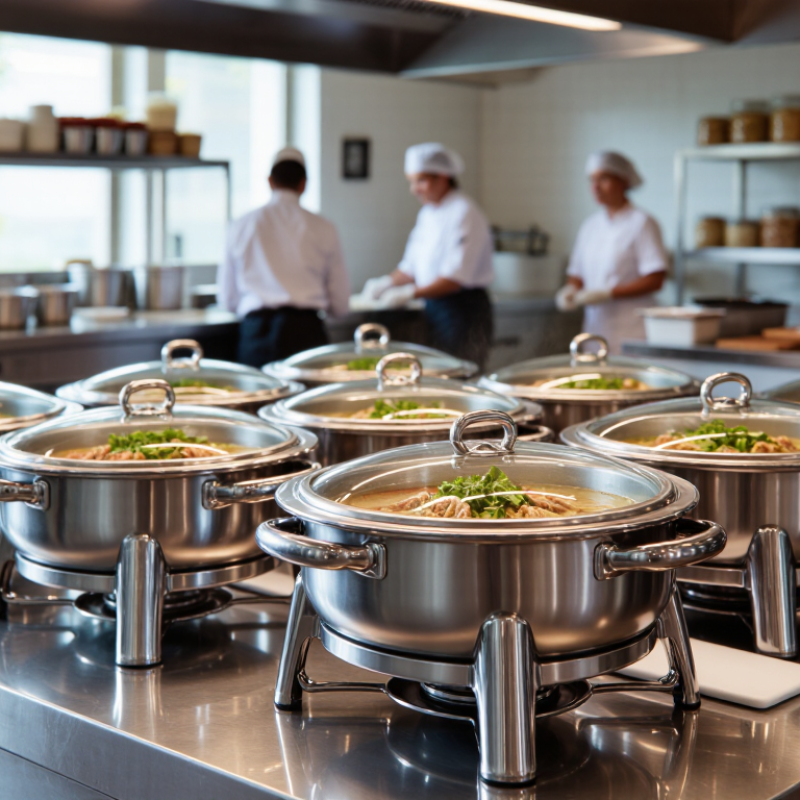
China Top Insulated Food Casserole Hotpot Manufacturer

Product Definition and Core Features of Insulated Food Casserole Hotpots

China Top Insulated Food Casserole Hotpot Manufacturer

An insulated food casserole hotpot is a reusable vessel designed to keep prepared meals warm without continuous heating. Its structure usually combines a food-contact inner pot, vacuum or foam insulation, an outer shell, and a tight-fitting lid. The insulation slows heat transfer. It does not create heat.

The FDA Food Code 2022 recommends holding hot food at 57°C (135°F) or above. This makes temperature retention a practical safety concern, not only a comfort feature. The U.S. Department of Agriculture also identifies 4–60°C (40–140°F) as the food safety danger zone. Reliable hotpots therefore need tested thermal performance, stable seals, and easy cleaning. A 2024 Grand View Research report estimated steady growth in the global food storage container market, driven partly by reusable meal storage and food delivery needs. That trend supports demand for durable casserole hotpots, but market growth does not prove every product performs equally.

Core features include double-wall construction, stainless steel interiors, silicone sealing rings, pressure-balanced lids, and wide openings for serving. A wide mouth helps remove rice, soup, or stew with less scraping. It also simplifies washing. Capacity should match real use, from individual lunches to shared family meals. Temperature results vary with food volume, starting temperature, lid opening, and ambient conditions. Even good insulation can disappoint when the container is half-filled. Manufacturers should publish test methods, sample temperatures, and holding times. Clear data builds trust. Fancy claims do not.

Materials, Insulation Structure, and Heat Retention Technology

A reliable insulated food casserole begins with careful material selection. Food-contact stainless steel provides strength, corrosion resistance, and simple cleaning. Some designs use food-grade polypropylene for lighter handling. The inner pot needs a stable, smooth surface. Thin metal warms quickly, but it can lose heat just as quickly. During production, we inspect welds, lid fit, and surface finishing. Small gaps matter.

The insulation structure usually combines double walls with a vacuum layer or thermal foam. Vacuum construction reduces heat transfer through air, while foam improves impact resistance and controls production costs. A tightly fitted lid limits steam and heat escaping from the top. Silicone sealing rings can improve closure, but they require accurate sizing and regular cleaning. No insulation works perfectly. Food temperature, opening frequency, and serving volume all affect retention. In practical testing, we measure temperature at fixed intervals instead of relying on touch. This approach reveals uneven cooling and weak lid performance. Results can still vary.

Tips: Preheat the casserole with hot water for several minutes before adding food. Fill it adequately, because a nearly empty container cools faster. Keep the lid closed. Clean the sealing ring after every use, and replace it when it becomes loose or cracked. A strong design helps, but daily handling still decides much of the result.

China Top Insulated Food Casserole Hotpot Manufacturer - Materials, Insulation Structure, and Heat Retention Technology

Category Component or Technology Common Material Typical Technical Data Insulation or Heat-Retention Function Food-Contact and Safety Considerations
Inner Vessel Corrosion-resistant cooking and serving liner Austenitic stainless steel, commonly 304 grade Thermal conductivity: approximately 14–16 W/m·K; good resistance to water, salt, and weak food acids Provides structural strength and hygienic food contact; the relatively low conductivity of stainless steel reduces heat spreading compared with aluminum Use food-contact compliant material; smooth welds and polished surfaces support cleaning and reduce residue retention
Inner Vessel Premium corrosion-resistant liner Austenitic stainless steel, commonly 316 grade Thermal conductivity: approximately 14–16 W/m·K; improved resistance to chloride-rich environments compared with 304 grade Maintains the same basic thermal role as 304 stainless steel while offering additional corrosion resistance for salty or acidic foods Suitable where repeated exposure to salt or cleaning chemicals requires enhanced corrosion resistance; grade selection should match the intended use
Outer Housing Protective exterior shell Stainless steel, polypropylene, or painted metal Selected for impact resistance, cleanability, appearance, and compatibility with the insulation layer Creates the outer boundary of the thermal system and helps protect the insulation from mechanical damage Exterior surfaces should remain stable under normal handling and should not transfer coatings or residues to food-contact areas
Insulation Layer Rigid closed-cell thermal barrier Polyurethane foam, typically PU Typical thermal conductivity: approximately 0.020–0.030 W/m·K, depending on density, formulation, and temperature Reduces conductive heat loss around the base and side walls; continuous filling helps minimize thermal bridges Foam should be fully enclosed and isolated from food; manufacturing controls should prevent voids, shrinkage, and moisture ingress
Insulation Layer Flexible thermal liner or spacer Expanded polyethylene or expanded polypropylene Low-density closed-cell structure; thermal performance varies with density and compression Adds resistance to conduction and provides cushioning against impact; often used in lighter portable designs Must be separated from the food-contact surface and protected from prolonged exposure to high heat unless specifically rated
Advanced Insulation Double-wall vacuum construction Inner and outer stainless-steel walls with evacuated space Vacuum gap commonly designed at a few millimeters; heat transfer by gas conduction and convection is greatly reduced Minimizes conduction and convection; reflective surfaces can further reduce radiant heat transfer Requires reliable sealing and vacuum integrity; the outer surface may remain cooler than the contents but can still become warm during extended use
Cover System Insulated lid with sealing interface Stainless steel or polypropylene lid with silicone gasket Silicone thermal conductivity is commonly around 0.15–0.25 W/m·K; gasket hardness and compression affect sealing Limits heat loss through the largest opening and reduces air exchange, evaporation, and spill risk Gasket material should be food-contact suitable, odor-resistant, removable, and easy to clean; avoid designs that trap food particles
Thermal Design Reduced thermal-bridge construction Low-conductivity supports, limited metal contact points, and insulated base Performance depends on contact area, wall thickness, support geometry, and the quality of joints Reduces concentrated heat paths through handles, feet, rims, and attachment points Design should maintain mechanical stability without creating exposed crevices or difficult-to-clean interfaces
Heat-Retention Performance Foam-insulated casserole hotpot Stainless-steel liner with PU or polymer insulation Typical design target: approximately 4–8 hours of useful heat retention, depending on capacity, fill level, lid fit, and ambient temperature Suitable for serving, catering, commuting, and short-duration meal holding Actual results should be verified using a defined test method rather than relying only on nominal insulation thickness
Heat-Retention Performance Vacuum-insulated casserole hotpot Double-wall stainless-steel vacuum body Typical design target: approximately 6–12 hours of useful heat retention, subject to vessel size, fill ratio, sealing quality, and test conditions Provides stronger resistance to conduction and convection than a basic single-wall container Vacuum integrity, weld quality, lid sealing, and protection against dents are critical to long-term performance
Verification Method Controlled heat-retention test Water or prepared food simulant Record starting temperature, ambient temperature, fill volume, lid condition, measurement points, and elapsed time Creates comparable data for different structures and capacities while identifying heat-loss weaknesses Hot-food holding should also consider applicable local food-safety requirements and the safe temperature range for the intended food

Note: Heat-retention figures are typical engineering targets rather than guaranteed results. Actual performance varies with vessel capacity, initial food temperature, fill level, lid opening frequency, ambient conditions, and test procedure.

Manufacturing Process of China-Made Insulated Food Casserole Hotpots

China Top Insulated Food Casserole Hotpot Manufacturer

Manufacturing Process of China-Made Insulated Food Casserole Hotpots

China-made insulated food casserole hotpots begin with food-contact material selection. Manufacturers commonly use stainless steel, polypropylene, silicone, and insulating foam. Each material must resist heat, corrosion, odor absorption, and repeated washing.

The 2024 UNEP Food Waste Index Report estimated 1.05 billion tonnes of food waste in 2022. Better heat retention can support safer serving intervals and reduce unnecessary reheating.

The process usually starts with stainless-steel sheet cutting and deep drawing. Precision forming creates the inner pot with fewer seams. Workers then polish the surface and test its thickness. The outer shell is molded separately. Insulation is injected or fitted between both walls. Vacuum insulation may improve thermal performance, but it demands stronger sealing control. Small leaks can remain invisible.

Assembly follows with lid fitting, handle installation, and gasket placement. Quality teams check temperature retention, leakage, pressure resistance, and odor transfer. Many factories use timed heat tests at controlled temperatures. These tests should include repeated opening and washing. A single laboratory test is not enough. ISO 22000 principles also encourage documented hygiene controls across production.

In practice, consistency remains difficult. Minor dents can affect lid alignment. Uneven gaskets may reduce insulation performance. Some suppliers still rely heavily on manual inspection, which creates variation. Better factories combine trained operators with calibrated instruments and traceable batch records. That evidence matters for importers, catering buyers, and commercial kitchens.

Quality Standards, Safety Testing, and Customization Options

China Top Insulated Food Casserole Hotpot Manufacturer

A reliable insulated food casserole hotpot begins with controlled material selection. Food-contact surfaces should be checked for odor, discoloration, and chemical migration. Stainless steel, food-grade plastics, and silicone seals need traceable inspection records. Each batch should also receive dimensional checks, because a small lid gap can reduce heat retention.

Safety testing should reflect daily use, not only laboratory conditions. Tests may include leak resistance, drop impact, thermal cycling, handle strength, and insulation performance. Hot food can expose weak seals quickly. Cold dishes can reveal condensation problems. Testing should follow applicable food-contact and product safety requirements in the target market. A perfect-looking sample may still disappoint after repeated washing. That is an area manufacturers should review honestly.

Tips: Ask for material reports, test records, and sample results before placing a large order. Compare heat-retention data after several hours, not only after filling. Customization can include capacity, compartment design, lid structure, handle shape, colors, packaging, and surface markings. However, every change should be tested again. A thicker wall may improve insulation but increase weight. A tighter seal may prevent leaks but make opening difficult. Practical feedback from kitchens and households often exposes weaknesses that drawings miss.

How to Select a Reliable Chinese Insulated Hotpot Manufacturer

China Top Insulated Food Casserole Hotpot Manufacturer

How to Select a Reliable Chinese Insulated Hotpot Manufacturer

Selecting a Chinese insulated hotpot manufacturer requires more than comparing prices. Check the factory’s production history, export experience, and quality control records. A polished catalog is not enough. Ask for clear photos of welding areas, inner pots, lids, and insulation layers.

During supplier evaluations, request samples from regular production lines. Test heat retention with hot food and record the temperature after several hours. Inspect the lid seal, handle strength, surface finish, and base stability. Food-contact materials should have suitable documentation, such as stainless steel composition reports and safety test results. Small details matter.

A dependable manufacturer should explain its process clearly. Discuss tooling costs, minimum order quantities, delivery schedules, packaging, and replacement procedures before placing an order. Factory video calls can help, but an independent inspection gives stronger evidence. Do not rely only on promised capacity. A large workshop may still miss scratches or uneven polishing. This is where careful buyers sometimes make mistakes.

Ask how defects are recorded and corrected. Request a pre-shipment inspection with agreed standards. Confirm whether sample changes will appear in mass production. Communication should remain practical, consistent, and documented. If answers are vague, pause the order. A reliable partner accepts reasonable questions and provides measurable proof.

FAQS

Which materials should a reliable insulated food casserole use?

Check food-grade stainless steel, plastics, and silicone seals. Each material should have traceable inspection records. Look for odors, discoloration, and surface defects. A small lid gap matters.

What safety tests should the casserole complete?

Important tests include leak resistance, drop impact, thermal cycling, and handle strength. Insulation performance also needs measurement. Hot food can expose weak seals quickly. Cold dishes may reveal condensation problems.

How can heat retention be tested properly?

Fill samples with hot food and record the temperature after several hours. Use the same food amount and testing conditions. Compare results across several samples. Keep the method consistent.

What should buyers inspect on a product sample?

Examine the lid seal, handles, base stability, and surface finish. Check welding areas and inner-pot edges carefully. Look for scratches, uneven polishing, or loose parts. A beautiful sample can still fail later.

Which customization options are commonly available?

Customization may include capacity, compartments, lids, handles, colors, packaging, and surface markings. Every change requires fresh testing. A thicker wall may improve insulation but increase weight. Better is not always easier.

How should buyers evaluate a potential supplier?

Review production history, export experience, and quality-control records. Request photos of welding areas, insulation layers, lids, and inner pots. Samples should come from regular production lines. Catalogs alone prove little.

What documents should buyers request before ordering?

Ask for material reports, safety test results, inspection records, and sample data. Confirm defect procedures and replacement terms. Document packaging, delivery schedules, tooling costs, and order quantities. Vague answers deserve caution.

Is a factory video call enough for verification?

A video call can show production areas and equipment. An independent inspection provides stronger evidence. Request a pre-shipment inspection with agreed standards. Do not rely only on promised capacity.

What common mistake should buyers avoid?

Do not compare suppliers by price alone. Do not test only one attractive sample. Repeated washing may reveal weaknesses later. Even careful checks can miss details.

Conclusion

An Insulated Food Casserole Hotpot is a practical kitchen and catering container designed to keep prepared meals warm for extended periods without continuous heating. Its performance depends on food-grade materials, a well-sealed inner pot, an insulated air or thermal layer, and a durable outer shell. China-made models are typically produced through material inspection, precision forming, component assembly, sealing, surface finishing, and heat-retention testing. Different structures may use stainless steel, food-safe plastics, or other approved materials to balance durability, safety, weight, and thermal efficiency.

A reliable manufacturer should follow consistent production procedures and provide quality controls covering material safety, leakage prevention, temperature retention, durability, and hygienic design. Buyers can also request customization of capacity, color, shape, packaging, labeling, and functional details according to market needs. When selecting a Chinese supplier, evaluate manufacturing experience, testing capabilities, production capacity, communication, sample quality, and after-sales support. Clear specifications and inspection requirements help ensure the final Insulated Food Casserole Hotpot is safe, dependable, and suitable for long-term use.

Isabella

Isabella

Isabella is a highly experienced marketing professional dedicated to helping customers better understand practical solutions, emerging trends, and the value of reliable products. With a strong understanding of the company’s offerings, she combines market insight, product knowledge, and clear......