
Knowledge & Industry Updates

BOHARA Group Blog & Insights

Latest news, expert buying guides, and technical insights on commercial stainless steel cookware and houseware manufacturing.

0%

Choosing the best Commercial Electric Water Boiler in 2026 is not simply about finding the largest tank or the lowest price. A busy café, hotel breakfast room, or office kitchen needs dependable hot water throughout changing demand. The right unit should heat consistently, recover quickly, and maintain a safe serving temperature without wasting electricity.

This guide examines practical details that purchasing teams often overlook. Capacity matters, but so do insulation quality, thermostat accuracy, recovery time, drainage, and filter access. A boiler that serves 100 cups during a morning rush may struggle if its heating elements cannot recover fast enough. Stainless steel construction can support long-term hygiene, while clear water-level indicators help staff notice problems earlier. Small design choices matter.

Real-world operation also reveals weaknesses that product sheets may hide. Some models look efficient but require awkward cleaning routines. Others provide impressive output yet create excessive steam, noise, or heat around the counter. Energy ratings are useful, although they do not always reflect every workplace’s usage pattern. Hard water can shorten component life, even when a manufacturer promises strong durability.

The recommendations in this article compare performance, usability, maintenance demands, and overall value. They also consider manufacturer documentation, warranty coverage, and feedback from commercial users. No boiler is perfect. A reliable choice depends on matching the equipment with actual service volume, available space, water quality, and staff habits. That judgment may take more time, but it can prevent costly replacements later.
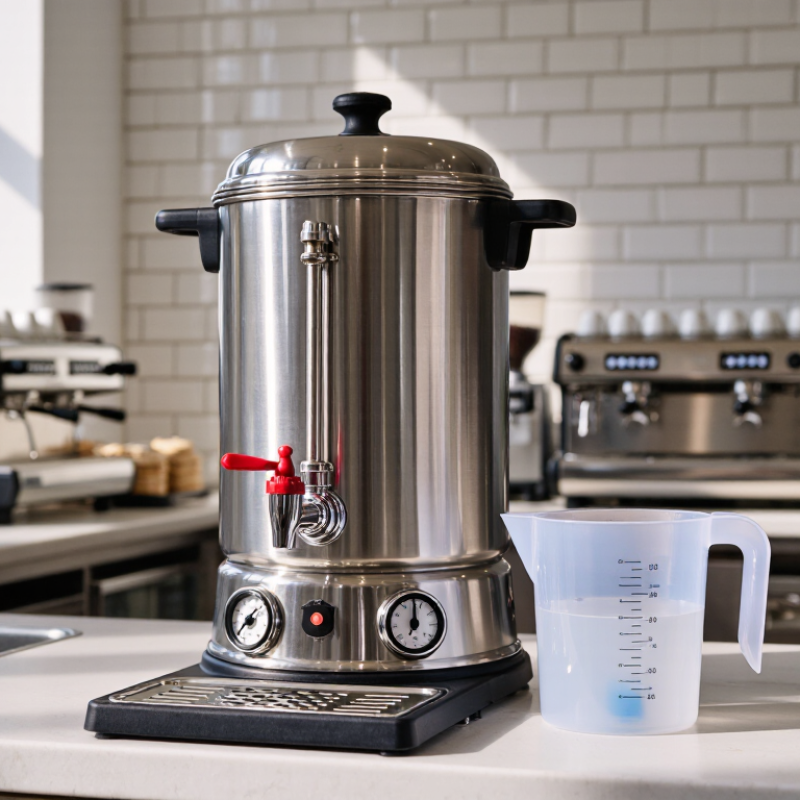
What Is the Best Commercial Electric Water Boiler in 2026?

What Defines the Best Commercial Electric Water Boiler in 2026

What Defines the Best Commercial Electric Water Boiler in 2026

The best commercial electric water boiler is not simply the fastest model. It must deliver stable temperatures, predictable recovery, and safe daily operation. DOE’s 2018 Commercial Buildings Energy Consumption Survey estimates water heating uses about 7% of commercial building energy. That makes efficiency a practical cost issue.

Look for insulated tanks, accurate digital controls, and low standby losses. A busy café may need rapid recovery after repeated 90°C pours. A clinic may value quieter operation and precise temperature control instead. ASHRAE Standard 90.1 provides widely used efficiency guidance for commercial buildings. NSF sanitation requirements also matter when heated water touches food-service equipment. Certification details should match local inspection rules.

Tips: Measure peak demand for one busy hour. Do not size equipment from average daily use. Check recovery time, tank volume, plug requirements, drain access, and scale protection. Hard water can leave a chalky ring around the heating element. That small detail becomes expensive. Maintenance records should include descaling dates and temperature checks. In my experience, oversized boilers often waste energy while undersized units frustrate staff. Still, published efficiency figures may not reflect real use. Opening the lid repeatedly, poor ventilation, and neglected filters can change performance. Ask suppliers for test conditions, not just impressive numbers.

Key Features to Compare in Commercial Electric Water Boilers

What Is the Best Commercial Electric Water Boiler in 2026?

Capacity comes first. A small café may need 10–20 liters, while a canteen needs faster recovery. Compare usable capacity, recovery rate, and peak-hour output, not tank size alone. The U.S. Energy Information Administration reported that water heating represented about 7% of commercial building energy use in its 2018 CBECS study. That makes standby control important. Thick insulation, programmable sleep settings, and accurate thermostats can reduce unnecessary reheating.

Electrical demand also deserves close attention. Check voltage, phase, circuit rating, and maximum wattage before installation. A powerful boiler may recover quickly, but it can increase peak demand charges. The IEA’s Energy Efficiency 2024 report states that buildings account for roughly 30% of global final energy consumption. Efficiency is not merely an environmental preference. It affects operating budgets. Details matter.

Temperature stability separates professional equipment from ordinary appliances. Look for independent overheat protection, dry-boil protection, food-contact compliance, and clear fault indicators. Stainless interiors should allow easy descaling and drainage, especially in hard-water areas. I would measure actual recovery time during service, because published figures often assume ideal conditions. A perfect comparison is impossible. Water quality, usage habits, and installation can change results. Do not guess. Record energy use, temperature swings, and maintenance time for several operating days before choosing a commercial electric water boiler.

What Is the Best Commercial Electric Water Boiler in 2026?

Key features to compare include water capacity, rated electrical power, heating speed, energy efficiency, temperature control, safety protection, and ease of cleaning.

The chart compares typical commercial electric water boiler capacity classes by estimated heating time. The estimates assume heating water from 20°C to 95°C with ideal heat transfer: 10 L at 1.5 kW, 20 L at 2.0 kW, and 40 L at 3.0 kW. Actual heating time may be longer because of heat loss, insulation quality, ambient temperature, and thermostat control.

For light-duty service, a smaller boiler can reduce energy use and countertop space. High-volume operations generally benefit from larger capacity, stronger insulation, continuous refill capability, dry-boil protection, and adjustable temperature control.

How Capacity, Speed, and Energy Efficiency Affect Performance

Commercial electric water boilers perform best when capacity, recovery speed, and energy efficiency match the actual service pattern. A 10-liter unit may suit a quiet office, but it can fail during a busy breakfast period. A larger tank provides reserve volume, yet it also increases standby losses. The U.S. Energy Information Administration’s Commercial Buildings Energy Consumption Survey reports that water heating represents about 7% of commercial building energy use. That share deserves attention.

Speed depends on heating elements, incoming-water temperature, and simultaneous demand. A high-input model can recover faster, but it may require stronger electrical infrastructure. The American Society of Heating, Refrigerating and Air-Conditioning Engineers recommends sizing hot-water systems around peak demand, not average daily use. This distinction matters. One rushed sizing decision can create long queues and repeated reheating.

Efficiency is more than a low wattage label. Check insulation, standby consumption, temperature controls, and programmed operating hours. ENERGY STAR’s commercial food-service guidance emphasizes efficient equipment, proper maintenance, and reduced idle operation as practical energy-saving measures. In real facilities, scale buildup can slow heat transfer and increase electricity use. I would not trust a brochure alone. Compare measured recovery time, kWh consumption, service records, and water quality conditions. The “best” boiler may be smaller than expected, or larger than the purchasing team first considered.

Which Boiler Types Suit Different Commercial Environments

What Is the Best Commercial Electric Water Boiler in 2026?

The best commercial electric water boiler depends on the working environment, not just its wattage. In a busy café, a storage boiler with strong insulation can handle repeated tea and coffee orders. A visible temperature display helps staff check performance quickly. Space matters. A compact point-of-use boiler suits a small office pantry or clinic. It reduces long pipe runs and avoids heating water nobody uses.

Restaurants with sharp demand peaks may need a high-recovery boiler or an instantaneous electric system. These units heat water as it flows, so they require adequate electrical capacity and stable water pressure. They also occupy less floor space. However, instant heating can struggle during simultaneous washing, cooking, and beverage service. Peak demand wins.

Hotels, schools, and care facilities often benefit from central storage systems. Larger tanks provide a dependable reserve for several outlets, but standby losses and scaling require attention.

A professional assessment should examine hourly usage, incoming water temperature, available power, drainage, and maintenance access. Hard water can coat heating elements and reduce recovery speed. Regular descaling and temperature checks support safer, more consistent operation. A qualified technician should verify installation against applicable local requirements. I would avoid choosing from a catalogue alone. Real sites behave differently, and staff habits can change quickly. A smaller boiler may work well today, yet fail during seasonal events. That uncertainty deserves testing before purchase.

How to Select, Install, and Maintain the Right Water Boiler

Choosing the best commercial electric water boiler in 2026 starts with demand, not tank size. Record peak drawdown, inlet temperature, outlet temperature, and recovery time. Kitchens may need rapid recovery, while offices often need stable, moderate output. The IEA’s Energy Efficiency 2023 report states that buildings consume about 30% of global final energy. Small efficiency losses can become expensive at commercial scale.

Select equipment with adjustable temperature controls, corrosion-resistant materials, accessible heating elements, and clear safety alarms. Compare input power, recovery rate, standby loss, and local electrical capacity. ASHRAE Standard 90.1-2022 provides commercial energy-efficiency guidance, but it does not replace a site assessment. A 12-kilowatt unit may look efficient on paper. It may still fail during a breakfast service rush. That mistake is common.

Installation should include correctly sized wiring, grounding, isolation valves, pressure protection, and enough service clearance. Have qualified electrical and plumbing professionals verify load calculations and local requirements. During maintenance, inspect connections, valves, sensors, and scale buildup. Flush sediment according to the manufacturer’s service schedule, then test temperature accuracy. The U.S. Department of Energy notes that water heating remains a significant energy use, making insulation and leak control practical savings measures. Perfect sizing is rare. Review real usage after installation, because staff habits often expose weaknesses that specifications miss.

What Is the Best Commercial Electric Water Boiler in 2026? - How to Select, Install, and Maintain the Right Water Boiler

Boiler Configuration Typical Capacity or Output Typical Electrical Requirement Recovery and Flow Characteristics Approximate Energy Use Installation Requirements Maintenance Needs Best Commercial Application Overall Suitability
Electric Tankless Water Heater Approximately 12–36 kW; flow commonly depends on a 20–35°C temperature rise 208–240 V; often requires multiple high-amperage circuits and a large electrical service Continuous production with little standby loss, but output is limited by available electrical power and inlet-water temperature. Energy is used only during flow; heating 1 liter by 40°C still requires about 0.0465 kWh before system losses.
  • Substantial electrical capacity
  • Correct conductor sizing and disconnects
  • Flow control and isolation valves
  • Manufacturer-specified water filtration where needed
Clean inlet filters, inspect connections, check flow sensors, and descale heat-transfer surfaces when hardness causes mineral buildup. Point-of-use sinks, low-to-moderate flow zones, and facilities with limited space Best for space saving
Electric Boiler with Indirect Storage Tank Approximately 9–54 kW boiler input with a separate 50–500 gal storage tank 208–480 V depending on system size; single-phase or three-phase; dedicated controls and disconnects required Separates heat generation from storage, allowing staged operation and strong peak-demand performance when properly sized. Water-heating energy is approximately 0.0465 kWh per liter for a 40°C temperature rise, plus pump, control, and standby losses.
  • Boiler, storage tank, pumps, valves, and controls
  • Hydronic or potable-water separation as applicable
  • Expansion tank and relief protection
  • Floor drainage and service clearance
Test safety controls, inspect pumps and valves, flush the storage tank, verify expansion protection, and check water chemistry according to the system design. Large commercial buildings, high-occupancy facilities, and systems requiring redundancy Best for high demand
Electric Heat-Pump Water Heater Approximately 50–120 gal per module; commonly 3–12 kW electrical input with supplemental resistance heat 208–240 V; dedicated circuit normally required; electrical demand is lower than resistance heating during heat-pump operation Slower recovery than resistance heating, but lower operating energy use. Performance depends on ambient air temperature and airflow. Typical coefficient of performance is about 2–4 under favorable conditions; actual results vary with climate, set point, and usage.
  • Suitable ambient-temperature range
  • Air intake and exhaust clearance
  • Condensate drain
  • Noise and service-access planning
Clean air filters and coils, clear condensate drains, inspect fans, check refrigerant-related faults, and maintain the storage tank and relief devices. Facilities prioritizing lower energy consumption and having adequate mechanical-room airflow Best for efficiency
Electric Steam Boiler Approximately 10–1,000 boiler horsepower; output varies widely by operating pressure 208–600 V; commonly three-phase; high-capacity electrical service and dedicated controls required Generates steam rather than domestic hot water. Requires properly designed distribution, condensate return, and pressure controls. Steam production requires approximately 2,257 kJ of latent heat per kilogram of water at around 100°C, plus sensible and system losses.
  • Pressure-rated piping and safety valves
  • Water treatment and blowdown provisions
  • Combustion-free boiler-room ventilation still required for heat removal
  • Professional commissioning and code inspection
Test low-water cutoffs and safety valves, manage blowdown, monitor water chemistry, inspect electrodes or heating elements, and maintain pressure controls. Commercial kitchens, laundries, process heating, humidification, and sterilization systems Best for steam service
Selection, Installation, and Maintenance Data Points
Sizing Method Determine peak-hour demand, maximum simultaneous flow, incoming-water temperature, required outlet temperature, recovery time, and acceptable storage volume. For water heating, a practical heat-load estimate is: energy in kWh = water mass in kg × temperature rise in °C × 4.186 ÷ 3,600. Use a qualified engineer or licensed installer for final sizing. Oversizing increases standby losses and capital cost; undersizing causes temperature drops and service complaints.
Temperature Control Use thermostatic controls and high-limit protection. Domestic hot-water set points must balance capacity, sanitation, energy use, and scald risk. A thermostatic mixing valve can reduce outlet temperature while allowing a higher storage temperature where permitted by local regulations. Follow local plumbing, electrical, health, accessibility, and legionella-prevention requirements. Confirm requirements before commissioning.
Electrical Planning Confirm voltage, phase, ampacity, short-circuit rating, disconnect location, grounding, and available service capacity before purchase. Resistance systems can require substantial peak electrical demand; staging or heat-pump technology can reduce peak load. All electrical work should comply with the applicable national and local electrical codes and be completed by qualified personnel.
Water Quality Hardness, sediment, chloride, conductivity, and corrosive conditions can shorten equipment life and reduce heat-transfer efficiency. Filtration, softening, scale control, or treatment may be necessary depending on incoming-water analysis and equipment requirements. Do not select treatment solely by assumption; test the water and follow the equipment manufacturer’s allowable limits.
Routine Service Schedule Monthly: inspect leaks, temperature, pressure, alarms, and visible corrosion. Quarterly to annually: flush sediment, inspect relief devices, test controls, check electrical connections, and verify operating performance. The exact interval depends on water quality, operating hours, local regulations, and the equipment type. Keep documented service records.
Technical ranges are general commercial planning values, not a substitute for the selected unit’s certified data sheet, local code requirements, or a professional site assessment.

FAQS

What defines the best commercial electric water boiler in 2026?

It should provide stable temperatures, predictable recovery, and safe daily operation. Speed alone is not enough.

How should a business choose the correct boiler size?

Measure water demand during the busiest hour. Do not rely on average daily use. Peak demand wins.

Which boiler suits a busy café?

A well-insulated storage boiler can handle repeated 90°C pours. A clear temperature display helps staff monitor performance quickly.

Is an instantaneous boiler suitable for every restaurant?

No. It needs sufficient electrical capacity and stable water pressure. Simultaneous washing, cooking, and beverage service may reduce performance.

When is a compact point-of-use boiler useful?

It suits small offices, clinics, and limited pantry spaces. Shorter pipe runs can reduce unused heating.

What should hotels, schools, and care facilities consider?

Central storage systems provide reserves for several outlets. Larger tanks may increase standby losses and scaling concerns.

Why do insulation and standby losses matter?

Water heating can represent a meaningful share of building energy use. Poor insulation keeps reheating an unused tank.

How does hard water affect boiler performance?

Mineral deposits can form a chalky ring around the heating element. Recovery may slow down. The repair cost can surprise you.

What maintenance should operators record?

Record descaling dates, temperature checks, filter condition, and drain access. Small omissions become expensive later.

Can published efficiency figures predict real performance?

Not always. Repeated lid opening, poor ventilation, and neglected filters can change results. Test conditions deserve careful review.

Conclusion

Choosing the best Commercial Electric Water Boiler in 2026 requires more than comparing price or heating capacity. The right unit should deliver consistent water temperature, fast recovery, reliable safety controls, simple operation, and efficient energy use. Important features include adjustable temperature settings, durable construction, insulation, automatic shutoff, clear water-level indicators, and easy-to-clean components. Capacity and heating speed should match daily demand, while energy efficiency can help control operating costs in busy kitchens, offices, hospitality settings, and service areas.

Different environments may require different boiler types, from compact countertop models for limited use to larger high-volume systems for continuous service. Before purchasing, evaluate available space, electrical requirements, water supply, and expected usage patterns. Professional installation can support safe and stable performance, while regular descaling, cleaning, inspection of electrical components, and replacement of worn seals can extend service life. By balancing capacity, performance, efficiency, safety, and maintenance needs, businesses can select a dependable water boiler that supports daily operations throughout 2026.

Eleanor

Eleanor

Eleanor is a seasoned marketing professional dedicated to helping customers better understand the value, quality, and practical applications of our company’s products and solutions. With a strong understanding of product development, market trends, customer needs, and industry communication, she......